
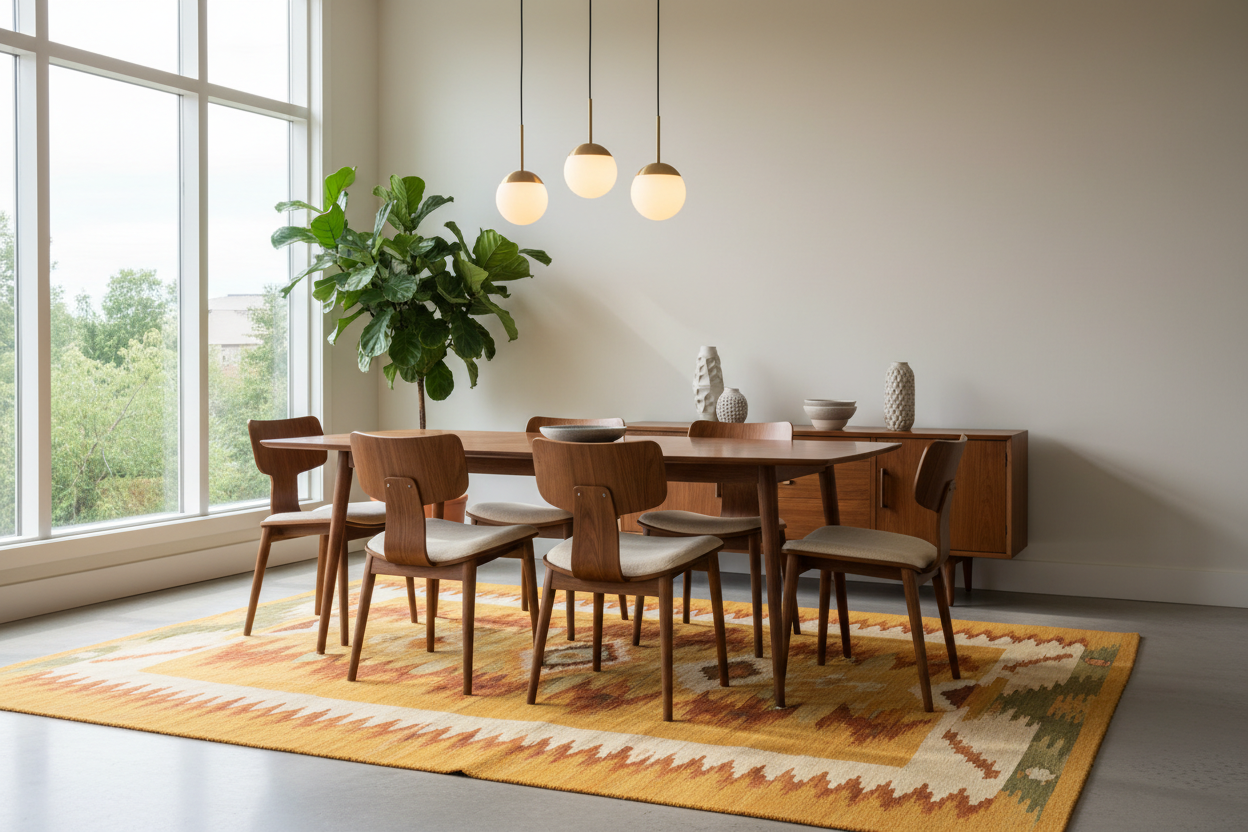
Dining Room Rugs: How to Choose the Right Size, Style & Material
TLDR: Your dining room rug should extend at least 24 inches beyond the table on all sides so chairs stay on the rug when pulled out. For most 6-seat tables, an 8x10 rug fits; for 8-seat tables, go 9x12. Choose low-pile or flatweave — wool, polypropylene, or machine-washable synthetic — for durability and easy cleanup. Match the rug shape to your table shape.
Table of Contents
- Why a Dining Room Rug Matters
- What Size Rug Do I Need for My Dining Room?
- What Shape Rug Works Best Under a Dining Table?
- What Is the Best Pile Height for a Dining Room Rug?
- What Materials Are Best for a Dining Room Rug?
- What Style and Color Works Best in a Dining Room?
- Should I Put a Rug Pad Under My Dining Room Rug?
- How Do I Clean and Care for a Dining Room Rug?
- Common Dining Room Rug Mistakes to Avoid
- Shop Dining Room Rugs at Super Area Rugs
Why a Dining Room Rug Matters
A dining room rug does more than add color. It defines the dining zone in an open floor plan, softens the acoustic echo of hard floors, and protects hardwood or tile from the constant scrape of chair legs. Done right, it pulls the entire room together — the table, the chairs, the light fixture — into one cohesive space.
Done wrong — meaning too small, wrong pile, or a material that traps crumbs — it creates daily frustration. This guide covers every decision so you get it right the first time.
What Size Rug Do I Need for My Dining Room?
Size is the single most important decision for a dining room rug. The golden rule: your rug should extend at least 24 inches beyond the table on every side. This guarantees that chair legs stay fully on the rug, even when someone pushes back from the table. Chairs sliding off the rug edge catch and tip — an annoyance at best, a hazard at worst.
Ruggable's rug size guide confirms that 24 inches of clearance on all sides is the standard minimum; some designers recommend 30 inches for a more generous, grounded look.
Quick-Reference Size Chart by Table Seating
| Table Size | Seats | Recommended Rug Size |
|---|---|---|
| 36"–48" round or square | 4 | 8x8 round or 8x10 |
| 60"–72" rectangle | 6 | 8x10 |
| 72"–84" rectangle | 8 | 9x12 |
| 90"–108" rectangle | 10–12 | 10x14 |
According to Driven by Decor, the 9x12 is the most commonly purchased dining room rug size — it works for the majority of American dining rooms with 6- to 8-seat tables.
How to Measure Before You Buy
- Measure your table length and width.
- Add 48 inches (24 inches per side) to each dimension.
- Round up to the nearest standard rug size.
- Double-check that 12 to 18 inches of bare floor remains between the rug edge and the wall — this "breathing room" keeps the room from feeling closed in.
What Shape Rug Works Best Under a Dining Table?
Match the rug shape to the table shape. Jaipur Living's dining room rug guide puts it plainly: round tables look best with round rugs, while rectangular tables suit rectangular rugs.
- Rectangular rugs are the most versatile and the easiest to size correctly. They work under rectangular, oval, and even square tables.
- Round rugs complement round pedestal tables and create a softer, more intimate feel. Size up — a round rug under a round table typically needs to be at least 2 feet larger in diameter than the table.
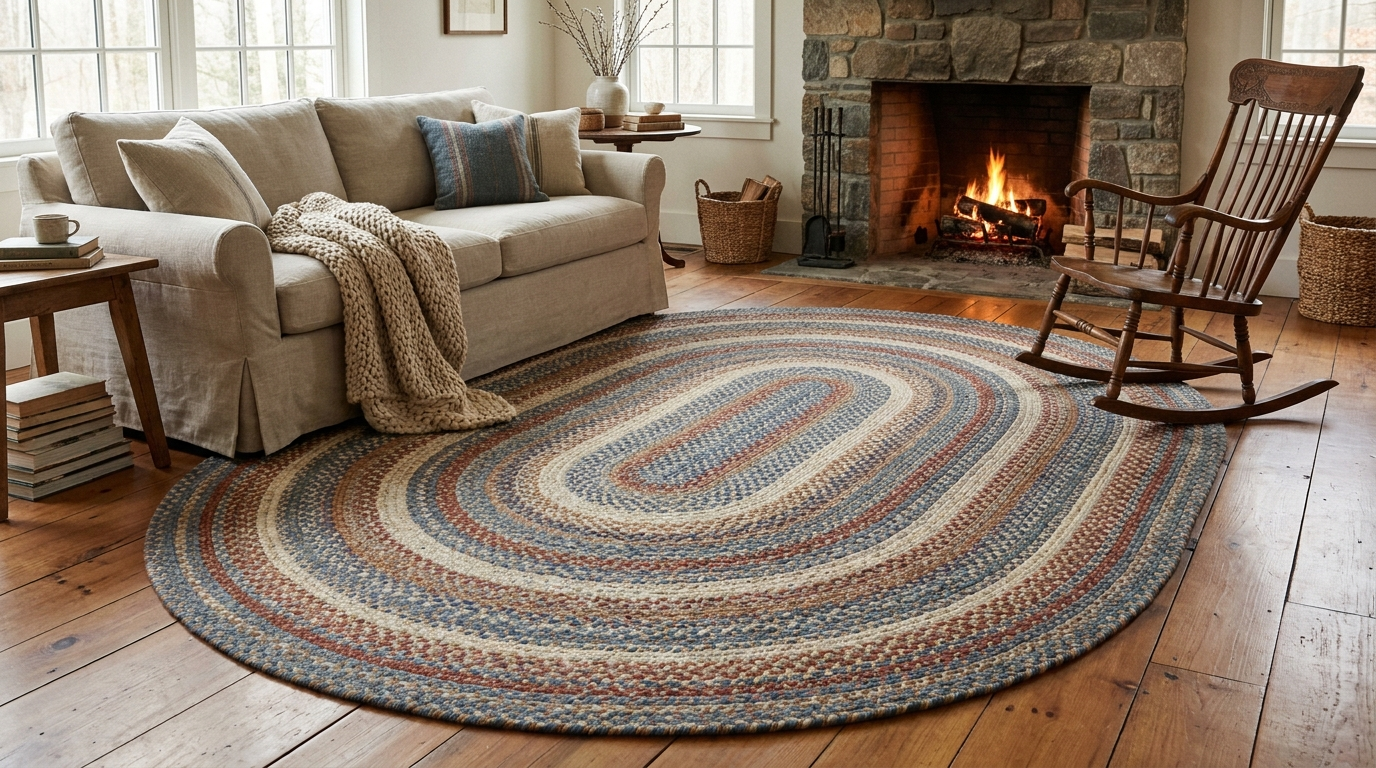
- Oval rugs are a natural pairing with oval dining tables and add a classic, traditional touch that works beautifully under farmhouse or cottage-style tables.
If you have a rectangular table but love the look of a round rug, it can work — just know the corners of the table will extend past the rug, which can look intentional in a relaxed, eclectic dining space.
What Is the Best Pile Height for a Dining Room Rug?
Low pile wins in the dining room — without exception.
A low-pile or flatweave rug (pile height under 0.5 inches) is the practical choice because:
- Chair legs slide smoothly across a flat surface. High-pile or shag rugs make chairs feel stuck and can tip or catch.
- Low pile traps far fewer crumbs, dust, and food particles.
- Cleaning a low-pile rug requires a quick vacuum pass rather than a deep dig.
Jaipur Rugs notes that low-pile rugs are the ideal choice under dining tables specifically because of chair movement. Interior designer Emily Henderson calls flatweave rugs her top pick for dining rooms — they provide texture and color without the functional drawbacks of a thick pile.
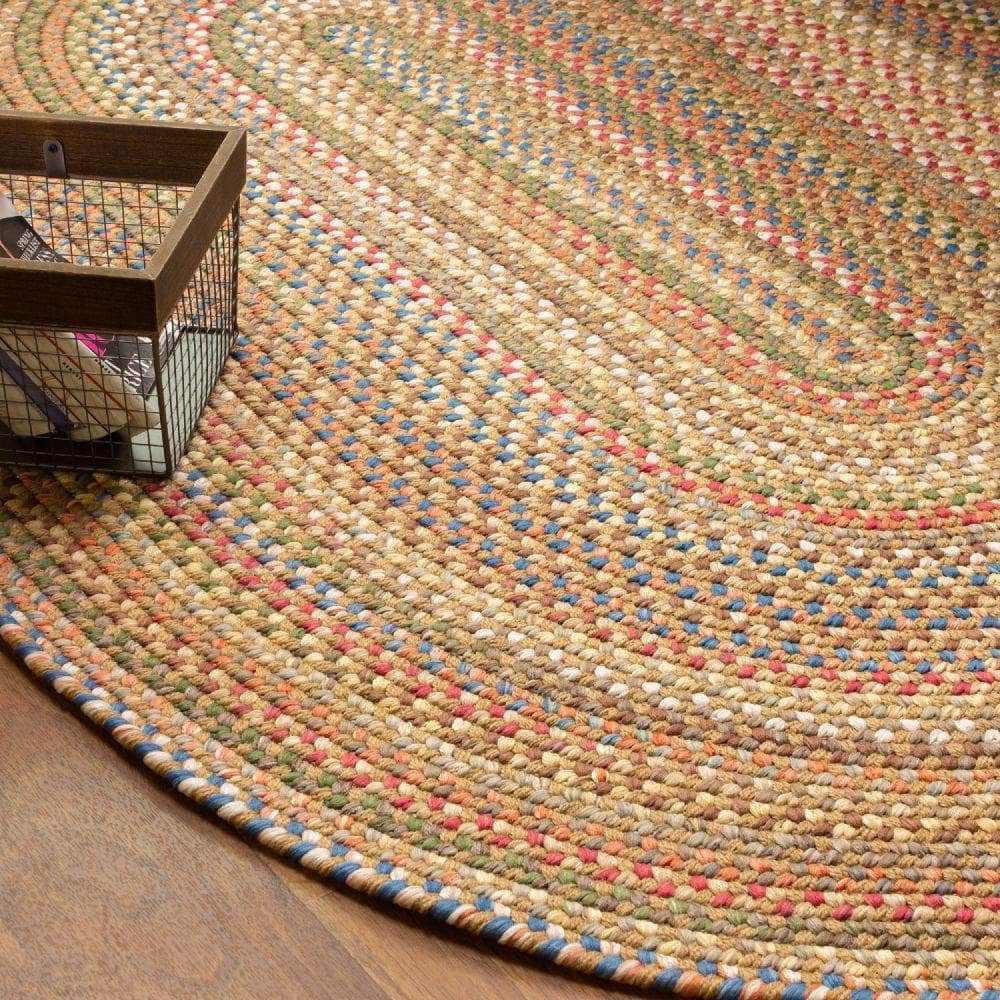
Braided rugs are another excellent low-profile option. Their tight, flat construction handles chair traffic well, and their artisan texture adds visual warmth that a plain flatweave sometimes lacks.
What Materials Are Best for a Dining Room Rug?
The dining room is a high-traffic, high-spill zone. Your material choice determines how easy the rug is to maintain and how long it lasts.
Wool
Wool is naturally stain-resistant — its fiber structure repels liquid before it soaks in, giving you a few seconds to blot a spill before it sets. The Spruce recommends wool for everyday-use dining rooms because it combines durability with ease of care. Wool rugs also hold their shape and color well over years of chair and foot traffic. A wool braided rug, like those handcrafted in the USA in Super Area Rugs' braided rug collection, brings warmth and artisan character to the dining room while standing up to real daily use.
Polypropylene (Indoor/Outdoor)
Polypropylene is the most practical choice for families with young children or pets. It resists stains, moisture, and fading, and most versions clean up with a damp cloth or garden hose. Indoor/outdoor polypropylene rugs have become increasingly popular in dining rooms precisely because they handle food spills with zero drama.
Machine-Washable Synthetic
Machine-washable rugs are the modern answer to the dining room's biggest challenge: inevitable spills. These rugs — typically made with a microfiber or synthetic pile over a washable backing — go straight in the washing machine when a full cleanup is needed. Super Area Rugs carries a wide range of machine washable area rugs that combine kid- and pet-friendly practicality with stylish patterns designed to complement today's dining room aesthetics.
Cotton / Flatweave
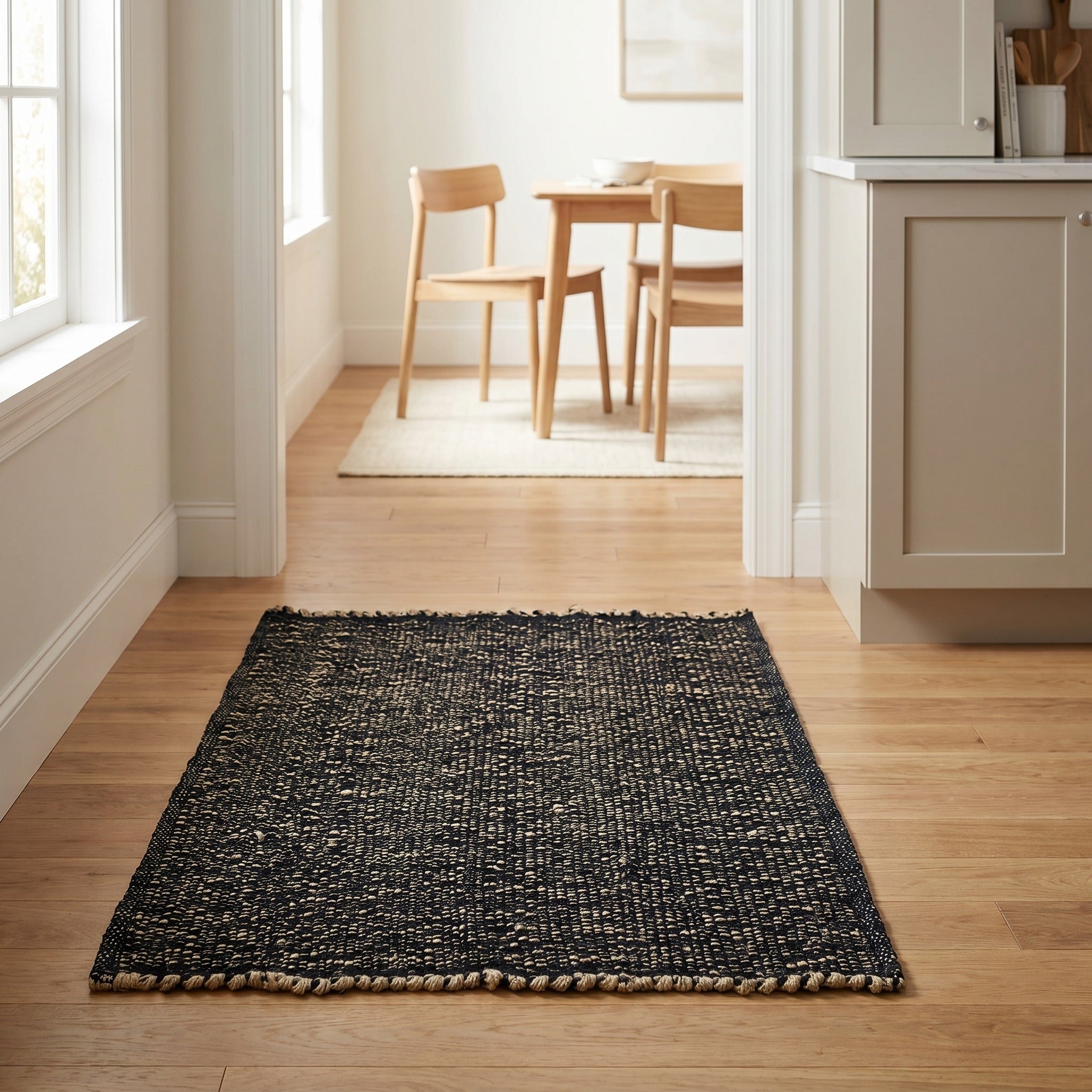
Cotton flatweave rugs are lightweight, easy to shake out, and often machine-washable. They come in a wide variety of patterns and work especially well in casual or farmhouse dining rooms. Natural cotton braided rugs add texture without height — a good match for the low-pile requirement of a dining space.
Materials to Avoid
- Shag / high-pile: Traps food, makes chair movement difficult.
- Viscose / rayon: Beautiful, but highly susceptible to water staining — a poor match for a room where spills are guaranteed.
- Silk: A formal fiber that requires professional cleaning; not practical for daily dining.
What Style and Color Works Best in a Dining Room?
There is no single "right" style, but a few guidelines make the decision easier.
Pattern: Choose Based on How Much Your Floor Shows
If your dining chairs are open-back or slatted, the rug is highly visible and a statement pattern pays off. If your chairs have solid, upholstered skirts that reach the floor, a simpler, solid rug or subtle texture is often enough.
Patterned rugs — geometric, transitional medallion, or botanical designs — hide crumbs and everyday wear better than solid colors. A rug that already has some visual complexity makes small spills and footprint marks far less visible between cleanings.
Solid or near-solid rugs work well in formal dining rooms or spaces where the table itself is the design centerpiece.
Color: Anchor or Complement
The two classic approaches:
- Pick up an accent color already present in your dining room — from the chairs, wall art, curtains, or china pattern — and let the rug echo it.
- Use a neutral (cream, taupe, warm gray, or natural jute) to anchor the room and give you flexibility as your decor evolves.
Darker rugs and those with busy patterns show spills and crumbs less readily than light-colored solid rugs — a practical advantage in the dining room.
Style Pairings
| Room Style | Rug Style |
|---|---|
| Farmhouse | Braided oval or rectangle, natural jute, cotton flatweave |
| Coastal / Casual | Striped flatweave, indoor/outdoor polypropylene |
| Traditional | Persian-inspired, transitional medallion, Oriental |
| Modern / Contemporary | Geometric, abstract, color-block |
| Bohemian | Layered textures, kilim-style, vintage-look washable |
Should I Put a Rug Pad Under My Dining Room Rug?
Yes — always use a rug pad under a dining room rug. A non-slip pad prevents the rug from shifting as chairs push in and out throughout every meal. On hardwood floors, this also protects the finish from the abrasive backing of most rugs.
Choose a thin, hard-surface rug pad (rather than a plush cushioning pad) to keep the rug as flat as possible — this reduces the risk of chair legs catching on an elevated edge.
How Do I Clean and Care for a Dining Room Rug?
Daily and weekly maintenance is straightforward for the right rug:
- Vacuum regularly — at least once a week for a dining room rug. Use a vacuum without a beater bar for flatweave and low-pile styles to avoid fraying.
- Blot spills immediately. Use a clean white cloth and work from the outside of the spill inward. Never scrub — it spreads the stain and damages fibers.
- Rotate the rug every 6 to 12 months. Dining chairs tend to concentrate wear in the same spots; rotation distributes this evenly.
- Deep clean wool rugs once or twice a year with a professional cleaner or a wool-safe rug shampoo.
- Machine wash your washable rug according to its tag — typically cold water, gentle cycle, low heat or air dry. This is where machine-washable rugs earn their value: a full refresh takes 90 minutes instead of a professional appointment.
For braided rugs, check the care label. Many of Super Area Rugs' USA-made braided rugs are hand-washable or hose-able, making them a sensible choice for kitchen-adjacent dining areas.
Common Dining Room Rug Mistakes to Avoid
Too small. The most common error. A rug that only fits under the table — with chair legs sliding off the edge every time someone sits down — looks awkward and accelerates edge wear. Always go larger than you think you need.
High pile in a high-traffic spot. A plush rug in the dining room feels luxurious for about a week. After that, it's a crumb trap that makes chairs harder to move and cleaning more labor-intensive.
Ignoring the floor gap. Leave 12 to 18 inches of bare floor between the rug edge and the walls. A rug that nearly reaches every wall makes a room feel smaller, not grander.
Choosing style over practicality. A light-colored, delicate-fiber rug in a home with children or pets is a setup for frustration. Prioritize a durable, cleanable material first, then find a style you love within that category.
Skipping the rug pad. Without a pad, a dining room rug shifts with every chair pull — it bunches, slides, and creates a trip hazard.
Shop Dining Room Rugs at Super Area Rugs
At Super Area Rugs, every rug in the collection is chosen with real homes — and real meals — in mind. Whether you need a durable, USA-made braided rug that handles daily chair traffic with ease, a machine washable area rug that survives pasta night without a second thought, or a classic wool rug that ages beautifully over years of family dinners, you'll find it in our curated collection.
All orders ship free, and we back every purchase with a 30-day return policy. Questions? Our team is always here to help you find the right rug for your space.
Shop All Dining Room Rugs at superarearugs.com