
Texture Over Pattern: The 2026 Rug Trend Taking Over Home Design
Table of Contents
- Why Texture Is Replacing Pattern in 2026
- What Makes a Rug "Textural"?
- 5 Textured Rug Styles Leading the Trend
- The Color Connection: Neutrals With Depth
- How to Style a Textured Rug in Any Room
- How to Choose the Right Textured Rug
- Shop Textured Rugs at Super Area Rugs
Why Texture Is Replacing Pattern in 2026
For years, pattern was the dominant force in rug design. Geometric prints, Persian motifs, overdyed abstracts — if it was bold and graphic, it sold. But 2026 marks a clear pivot.
Interior designers and homeowners alike are shifting toward tactile surfaces as the foundation of a room. According to Nazmiyal Antique Rugs, texture is now being used as the primary design element — taking up visual space and creating richness without the busyness of full patterning.
This is not a rejection of pattern. It's a reordering of priorities. A rug with a visible braided weave, a soft ribbed pile, or a hand-knotted finish can anchor a room with as much presence as any geometric print — while feeling calmer and more timeless.
The broader cultural driver is the continued rise of modern organic interiors: spaces that prioritize natural materials, artisan craftsmanship, and intentional simplicity. In that context, a rug's texture becomes its story.
"Rather than patterning, surface texture is being used as the basis for an interior. Elements such as visible weave, subtle abrash, softer pile, or hand-knotted finishes are becoming more favorable." — Nazmiyal Antique Rugs
What Makes a Rug "Textural"?
A textural rug prioritizes surface dimension over decorative print. The rug's construction method, fiber choice, and finishing technique create visual and physical depth — so it catches the light differently depending on the angle, and invites you to reach down and touch it.
Key characteristics of a textural rug:
- Visible construction detail: The weave, braid, or knot is part of the design — not hidden beneath a flat surface.
- Dimensional pile variation: High/low pile patterns, looped fibers, or varied braid widths create shadow and depth.
- Natural or matte fiber finish: Wool, jute, and polypropylene with a matte finish read as tactile rather than flat or shiny.
- Subdued color palette: Texture shines best in neutrals and earthy tones, where the construction — not the color — does the visual work.
Flat-woven kilims, for example, have little textural presence. A hand-braided rug in the same neutral palette tells a completely different story.
5 Textured Rug Styles Leading the Trend
1. Braided Rugs
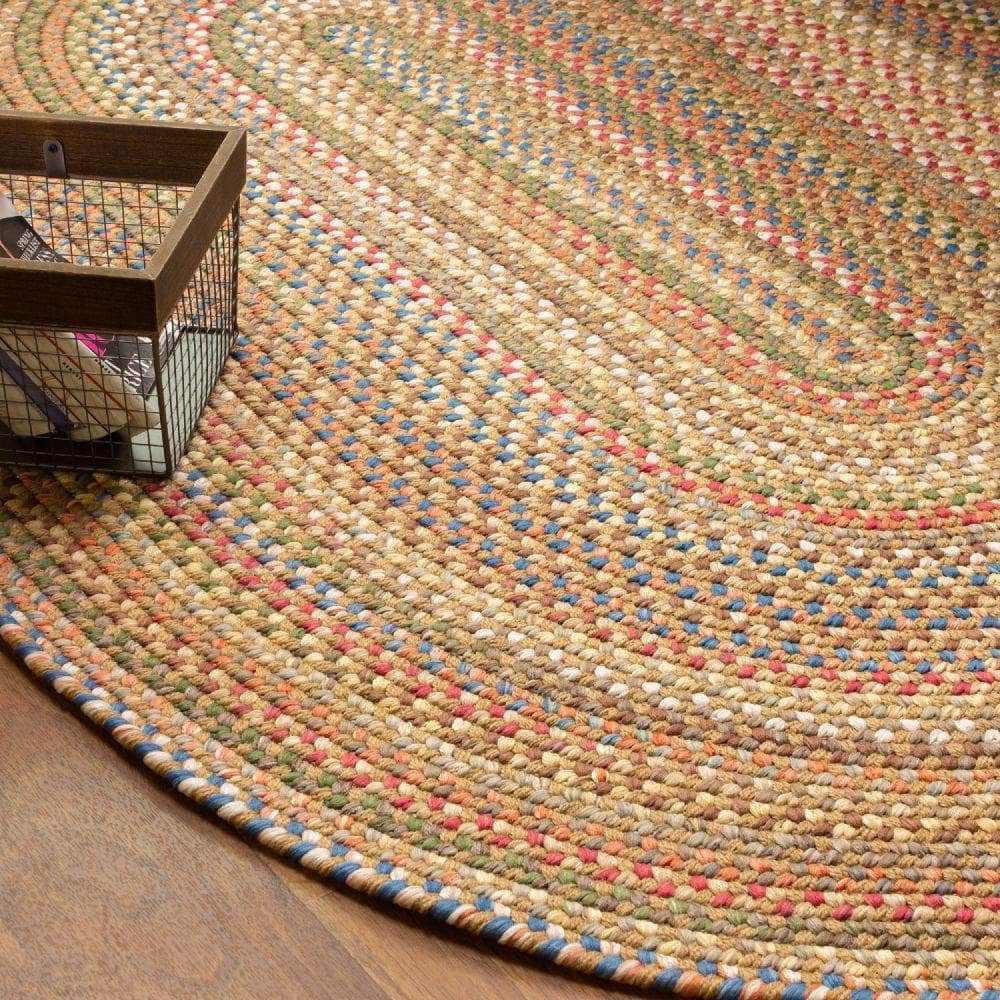
Braided rugs are the original textural statement piece — and they're more relevant in 2026 than they've been in decades. The visible braid creates a coiled, dimensional surface that reads as both handcrafted and grounding. In warm neutrals like beige, oat, and gray, braided rugs deliver exactly what modern organic interiors need: warmth, depth, and a sense of craft.
Super Area Rugs' Beige Braided Rug and Gray Braided Rug are strong starting points — reversible, durable, and built for real-life spaces.
2. Hand-Knotted & Handwoven Rugs
Hand-knotted construction creates subtle surface irregularities — a quality sometimes called abrash — that give each rug a unique, lived-in depth. According to rugs.com, woven mixed-fiber designs are among the top textural picks for 2026.
3. High/Low Pile Rugs
These rugs use alternating pile heights to create a sculpted, almost three-dimensional surface. The result is a rug that catches light in multiple ways, creating shadows and highlights that shift throughout the day.
4. Bouclé and Looped Wool
Inspired by the bouclé furniture trend, looped wool rugs bring the same curly, nubby texture to the floor. Think: a rug that looks as cozy as your favorite sweater.
5. Natural Fiber Rugs (Jute, Sisal, Seagrass)
Jute and sisal rugs are the most literally textural category — the fiber itself is coarse, organic, and visually complex. Natural Rug Co. notes that natural fiber rugs keep appearing as anchors of intentional spaces in 2026's biggest interior design trends. Super Area Rugs' Rustic Farmhouse Jute Rug captures this look in a range of earthy tones.
The Color Connection: Neutrals With Depth
Texture and color work together in 2026's rug trend — and the color story is just as specific. "Neutral" no longer means stark white-on-white. According to Nazmiyal Antique Rugs, warm neutrals with undertones are taking over: oat with a faint yellow, sand with a warm clay lean, gray with subtle lavender or green.
These nuanced colors work with textural rugs for a simple reason: when the color palette stays restrained, the construction becomes the star. A braided beige rug in a room of warm wood tones and linen upholstery doesn't need a pattern to make a statement. The braid is the pattern.
Best color pairings for a texture-first rug approach:
- Oat/warm cream with natural wood floors, rattan furniture, and linen curtains
- Warm gray with white walls, black iron fixtures, and oak accents
- Clay/terra cotta with plaster walls, raw wood, and dried botanical arrangements
- Soft sage or dusty green with warm white walls and natural fiber textiles
How to Style a Textured Rug in Any Room
Living Room
Layer a large braided or handwoven rug under a sectional or sofa. Let it extend at least 6 inches beyond the front legs of the furniture. A neutral textured rug acts as the room's foundation — you can then bring in color through pillows, throws, and art without the space feeling chaotic.
Dining Room
Round braided rugs are a perfect match for round or oval dining tables. The circular braid echoes the shape of the table and creates a contained, intentional zone. Aim for a rug that extends at least 24 inches beyond the table's edge so chairs stay on the rug when pulled out.
Kitchen
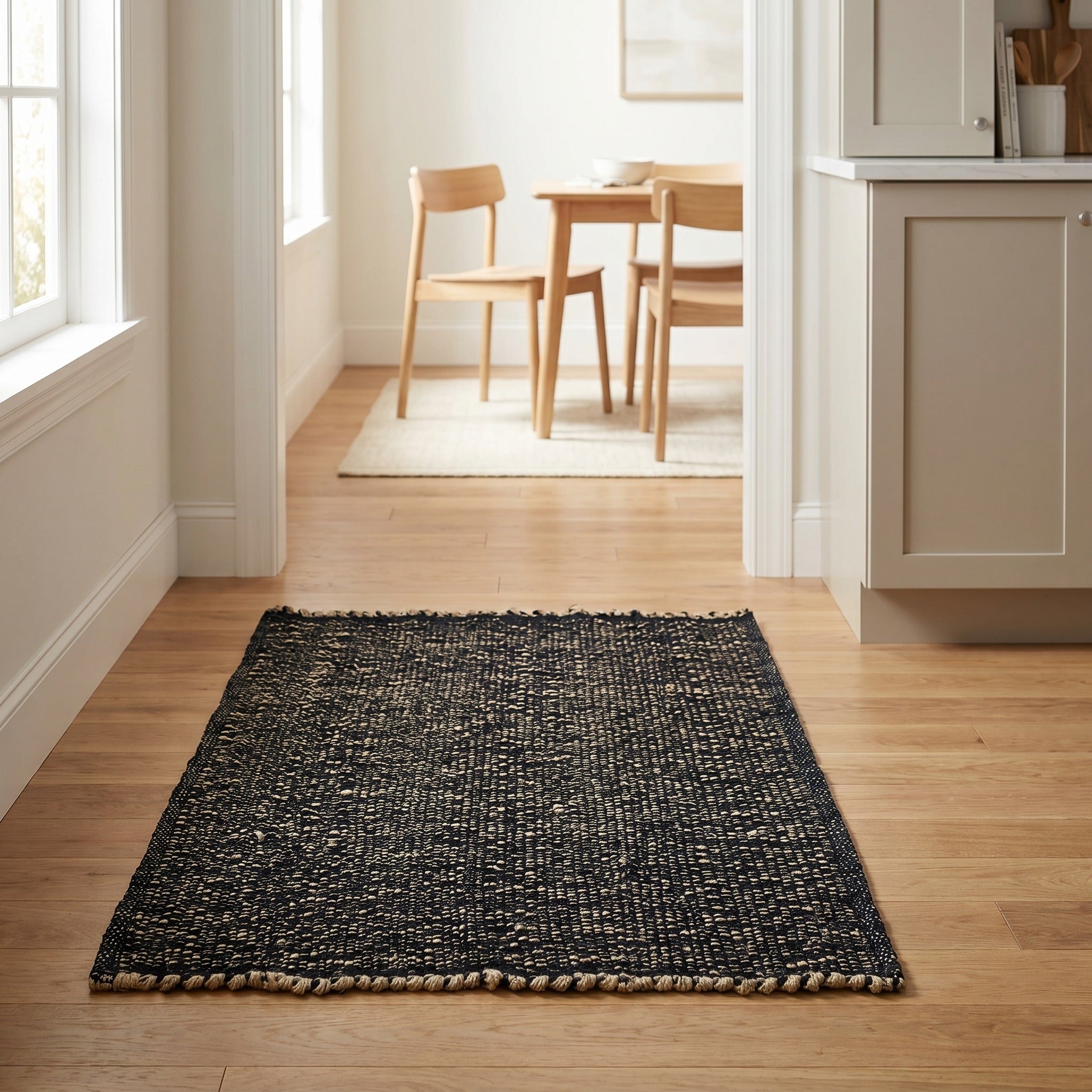
Kitchen runners in braided or woven textures add warmth and cushioning underfoot — and their dimensional surfaces are forgiving of spills and everyday dirt. The Ridgewood Braided Rug is a standout here: reversible, hand washable, and made in the USA.
Entryway
A braided oval or rectangle in a mid-to-dark neutral handles foot traffic and hides wear, while still contributing to the textural story you're building throughout the home.
Bedroom
Under-bed placement of a soft braided rug grounds the room and adds warmth underfoot for those first steps in the morning. Lighter neutrals like oat and warm cream work beautifully in a bedroom setting.
How to Choose the Right Textured Rug
1. Match the texture intensity to the room's activity level.
Higher-traffic spaces like kitchens and entryways benefit from tighter braids or flatweave constructions that hold up to heavy use. Softer, loopier textures suit low-traffic rooms like bedrooms and reading nooks.
2. Consider the existing visual complexity of the room.
If your furniture has a lot of detail — carved wood legs, patterned upholstery, graphic artwork — opt for a simpler, finer texture. A room with plainer furniture can carry a more dramatic braided or high/low pile surface.
3. Size up, not down.
One of the most common rug mistakes is going too small. A textural rug needs room to breathe and show its construction. In a living room, go for at least an 8x10; in a dining room, a 9x12 is usually the minimum for a standard table.
4. Think about reversibility.
Reversible rugs — like many of Super Area Rugs' braided styles — offer twice the lifespan. Flip the rug to instantly refresh the look without any additional cost.
5. Check care requirements before you buy.
Braided polypropylene rugs are among the easiest to maintain: many are hand washable or can be hosed down outdoors. Natural fiber rugs like jute require a bit more care but reward you with unmatched organic texture.
Shop Textured Rugs at Super Area Rugs
Super Area Rugs has been crafting textural, handmade braided rugs in the USA since 2010. Every piece in the Rhody and Ridgewood collections is built with visible, dimensional braided construction — the kind of surface that makes a room feel grounded, warm, and intentionally designed.
Top picks for the texture-first trend:
- Beige Braided Rug – Reversible, Indoor/Outdoor — from $39.99
- Gray Braided Rug – Reversible, Indoor/Outdoor — from $39.99
- Ridgewood Burgundy Braided Rug – Made in USA — from $79.35
- Rustic Farmhouse Jute Rug – Eco-Friendly, Multiple Colors — from $39.99
Free shipping. 30-day returns. 4.8 stars on Trustpilot.
Shop All Braided Rugs at Super Area Rugs →
Conclusion
The shift from pattern to texture is not a fleeting micro-trend. It reflects a broader desire for homes that feel earned — spaces built with craft, intention, and materials that improve with time. A braided rug doesn't just cover a floor. It adds dimension, warmth, and a handmade quality that no printed surface can replicate.
If you're updating your home in 2026, a textured rug is one of the highest-impact, lowest-risk changes you can make. Start with a neutral braided piece, let the construction do the talking, and watch how it transforms the whole room.