
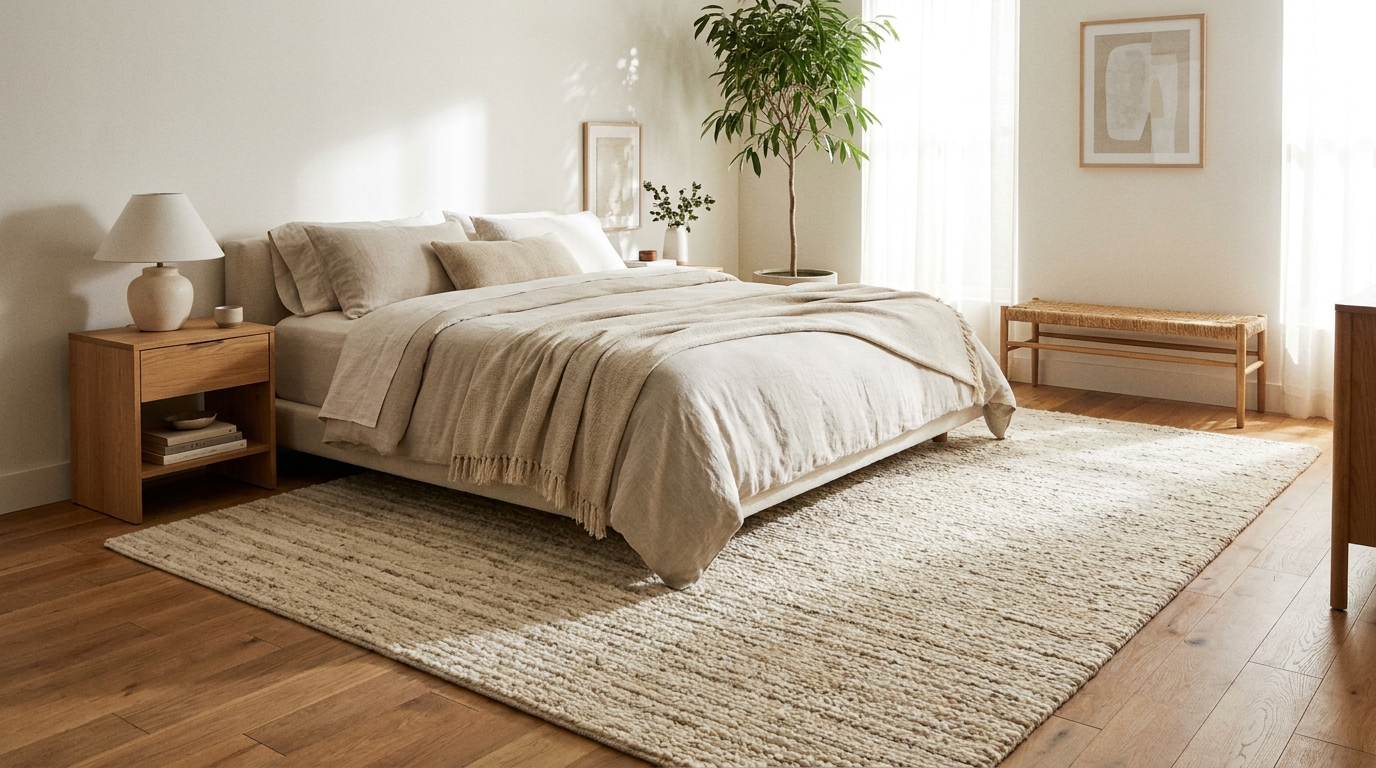
Bedroom Rugs: Size, Placement & Material Guide (2026)
A bedroom rug is the one piece of decor you touch before you're fully awake. Get it right and the room feels finished, quiet, and warm underfoot. Get it wrong — usually by buying too small — and the rug floats awkwardly under the bed like an afterthought.
This guide covers the three decisions that actually matter: size, placement, and material. By the end you'll know exactly which dimensions to order for your bed and how to style it.
Why Bedrooms Need a Rug More Than Any Other Room
Bedrooms tend to be sparse — a bed, a nightstand or two, maybe a dresser. That leaves a lot of hard, echoing floor. A rug does three jobs at once:
- Softness where you need it. Bare feet hit the floor beside the bed hundreds of times a year. Pile underfoot makes that first step warmer.
- Sound absorption. Textiles dampen footsteps and echo. A quieter room is a better sleep environment, and the Sleep Foundation lists noise control among the core factors in bedroom setup.
- Visual anchoring. A rug frames the bed and gives the room a defined center, which is exactly what a mostly-empty floor plan is missing.
Bedroom Rug Size Guide: What to Buy for Each Bed
The single most common mistake is buying a rug that's too small. The rule of thumb: your rug should extend 18 to 24 inches beyond the sides and foot of the bed. That's the walking margin — enough that you step onto rug, not floor, when you get out of bed.
| Bed Size | Recommended Rug Size | Also Works |
|---|---|---|
| Twin (38" x 75") | 5' x 8' | 4' x 6' placed horizontally at the foot |
| Full / Double (54" x 75") | 8' x 10' | 6' x 9' |
| Queen (60" x 80") | 8' x 10' | 9' x 12' in a large room |
| King (76" x 80") | 9' x 12' | 10' x 14' in a primary suite |
If you're torn between two sizes, size up. A slightly-too-large rug reads as intentional; a slightly-too-small one always reads as a mistake. Browse our full range of area rugs by size to compare options side by side.
Three Ways to Place a Rug Under a Bed
1. The Full Placement (Best Overall)
The rug sits under the entire bed, including the nightstands, with 18–24" of rug visible on three sides. This is the most polished look and the most comfortable in practice, because every step out of bed lands on rug. It's also the most expensive option, since you're buying a rug large enough to cover furniture you'll never see it under.
2. The Two-Thirds Placement (Best Value)
Slide the rug under the bed starting just below the nightstands, so it covers the lower two-thirds of the bed and extends past the foot. You get the soft landing on both sides and at the foot, and you can usually drop down one rug size. For most queen setups, an 8' x 10' placed this way works beautifully.
3. Runners on Either Side (Best for Tight Rooms)
In a small bedroom — or when the bed sits against a wall — skip the large rug entirely and run a pair of matching runners down each side. A third runner across the foot completes the frame if you have space. This is also the easiest layout to launder, since runners fit in a home washing machine far more readily than an 8x10.
Choosing a Material for the Bedroom
Bedrooms are low-traffic compared to entryways and living rooms, which means you can prioritize comfort over sheer durability. That opens up materials you'd never put by the front door.
Wool
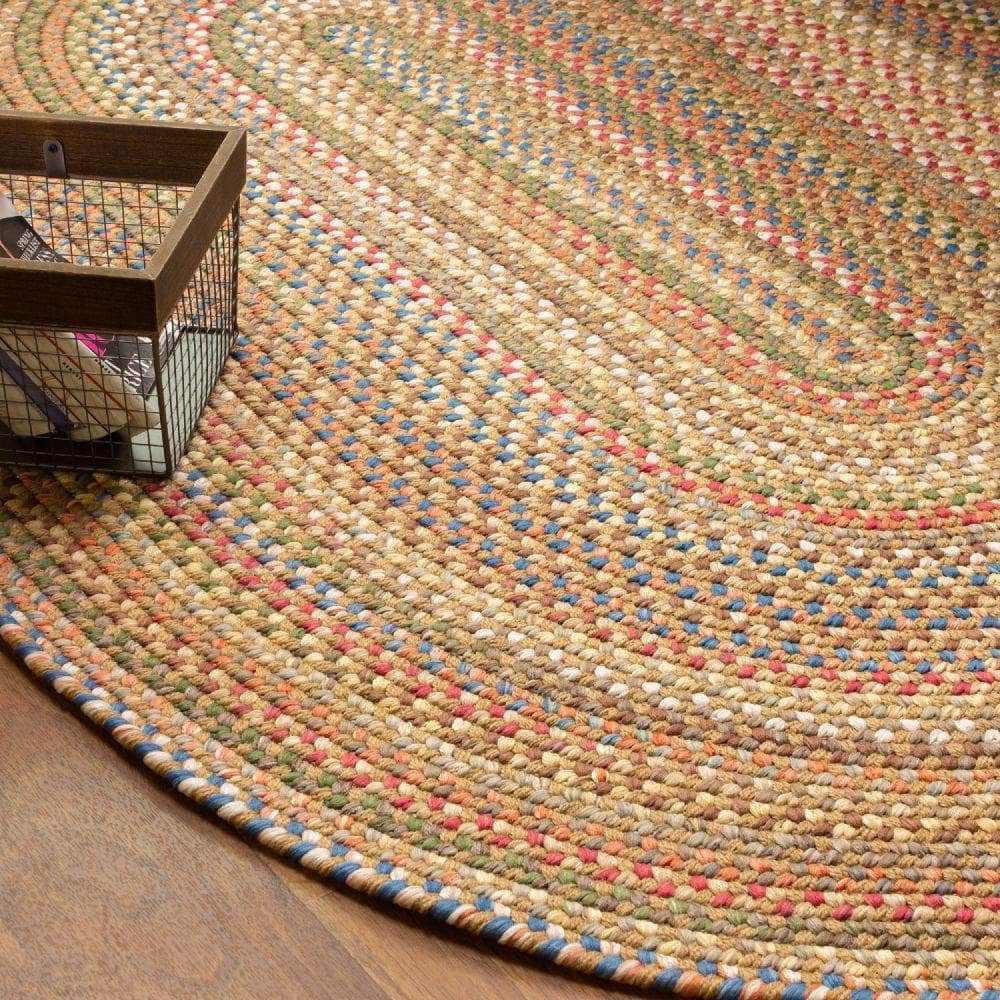
Wool is the classic bedroom fiber and it earns the reputation. It's naturally resilient — the crimp in the fiber lets it spring back after being compressed — and it's naturally flame-resistant and moisture-regulating. A good wool rug lasts decades. Our wool rug collection is a solid starting point, and if you like the texture of a wool rug but want something with more heirloom character, braided rugs layer in a handmade look.
Machine Washable
If you share the bed with a dog, have kids who pile in on weekend mornings, or eat breakfast in bed, a washable rug removes the anxiety. Modern washable constructions have come a long way from the thin, plasticky mats of a few years ago — many now have real pile and a proper hand. See the machine washable rug collection for sizes that fit standard home washers.
Natural Fiber and Jute
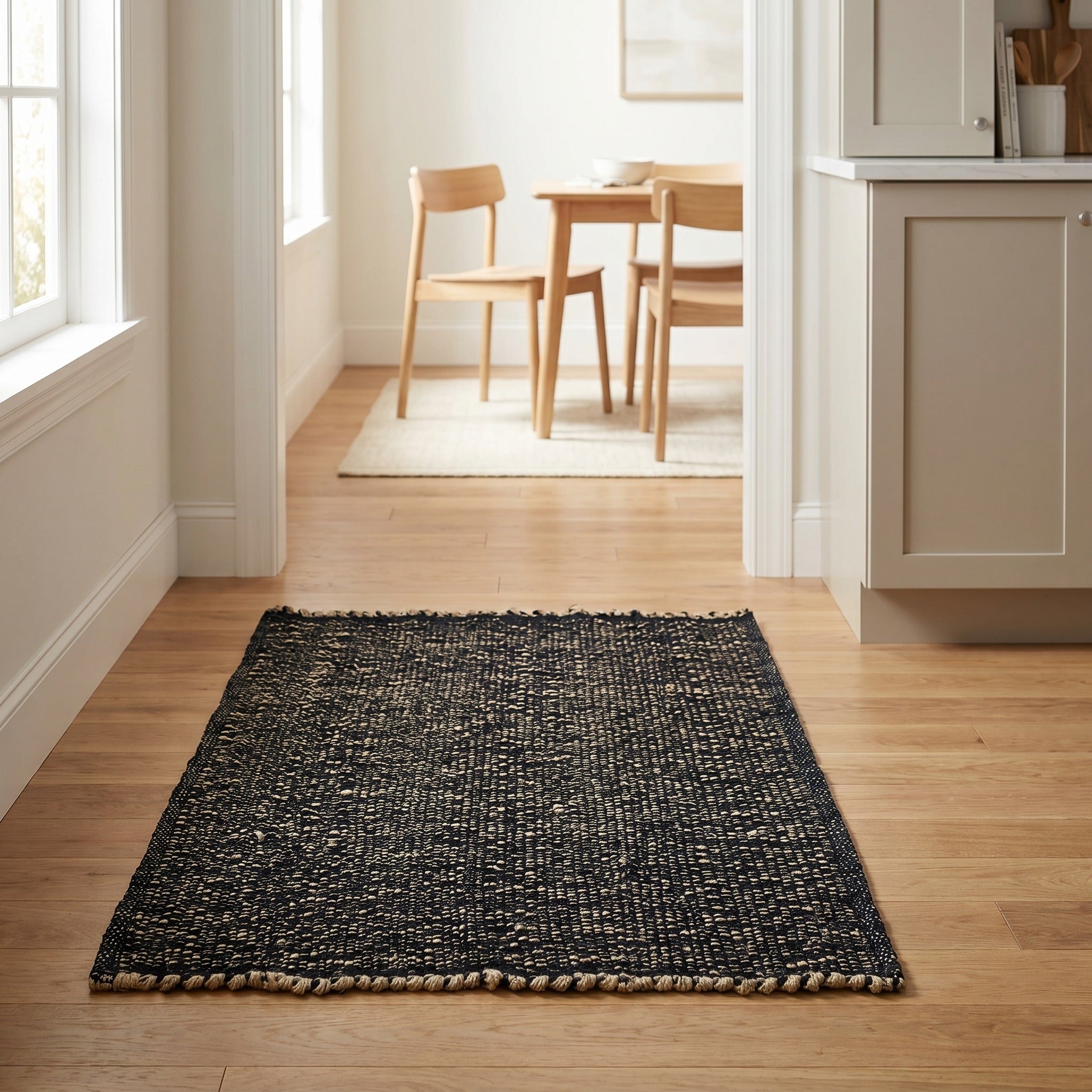
Jute and sisal bring texture and an organic, grounded look that works especially well in coastal, farmhouse, and minimalist bedrooms. The tradeoff is that they're coarser underfoot than wool. A common solution: layer a small sheepskin or a soft wool rug on top of a large jute base — you get the texture and the softness. Explore natural fiber and jute rugs for base layers.
A Note on Indoor Air Quality
There's a persistent belief that rugs worsen indoor air. In practice, carpet and rugs trap particulates and hold them until vacuuming removes them, rather than letting them circulate. The EPA's indoor air quality guidance emphasizes regular vacuuming and source control, and the Carpet and Rug Institute maintains testing programs for low-emitting textiles. If you're sensitive, look for wool or undyed natural fibers and vacuum weekly.
Color and Pattern: Keeping the Room Restful
Bedrooms are the one room where restraint usually wins. A few working principles:
- Neutrals are safe and they aren't boring. Ivory, oatmeal, greige, and soft taupe let the bedding be the focal point. Our neutral area rugs cover this range.
- If the bedding is patterned, the rug should be quiet — and vice versa. Two loud patterns compete.
- Small-scale, low-contrast patterns hide wear. A faded, overdyed vintage-style rug disguises everyday traffic better than a solid cream field.
- Go darker if you have pets. A mid-tone rug in a color close to your pet's coat is the practical choice nobody tells you about.
Don't Skip the Rug Pad
A rug pad does more than stop sliding. It adds cushion, protects the rug backing from grinding against hard flooring, and lets air circulate so the floor underneath doesn't trap moisture. On a bedroom rug that's mostly pinned down by a heavy bed frame, the cushioning matters more than the grip — a felt or felt-and-rubber pad in the 1/4" to 3/8" range is the sweet spot. Shop rug pads sized to trim down to your rug's dimensions (cut the pad about an inch smaller on each side so it doesn't peek out).
Bedroom Rug FAQ
What size rug goes under a queen bed?
An 8' x 10' is the standard answer. It gives you roughly 18–24" of rug on both sides and at the foot when centered under a 60" x 80" queen. In a large primary bedroom, a 9' x 12' looks even better.
Should the rug go under the nightstands?
Either works. Full placement (rug under the nightstands too) looks the most deliberate. Two-thirds placement (rug starting just past the nightstands) saves money and still feels good underfoot. What you want to avoid is the rug edge landing under a nightstand leg on one side and not the other.
Can I put a rug over carpet in a bedroom?
Yes — layering a rug over wall-to-wall carpet is a common way to add pattern and define the bed area in rentals. Use a low-pile rug and a pad designed for carpet-over-carpet to keep it from creeping.
How often should I clean a bedroom rug?
Vacuum weekly, rotate the rug 180° every six months to even out fading and wear, and plan on a deep clean every 12–18 months. Bedrooms are gentle on rugs, so this schedule keeps most of them looking new for years.
The Short Version
Buy bigger than you think you need. Leave 18–24" of rug on the sides and foot of the bed. Choose wool if you want it to last, washable if life is messy, and jute if you want texture. Add a pad. That's most of it.
Ready to shop? Start with our full area rug collection and filter to the size your bed calls for.