
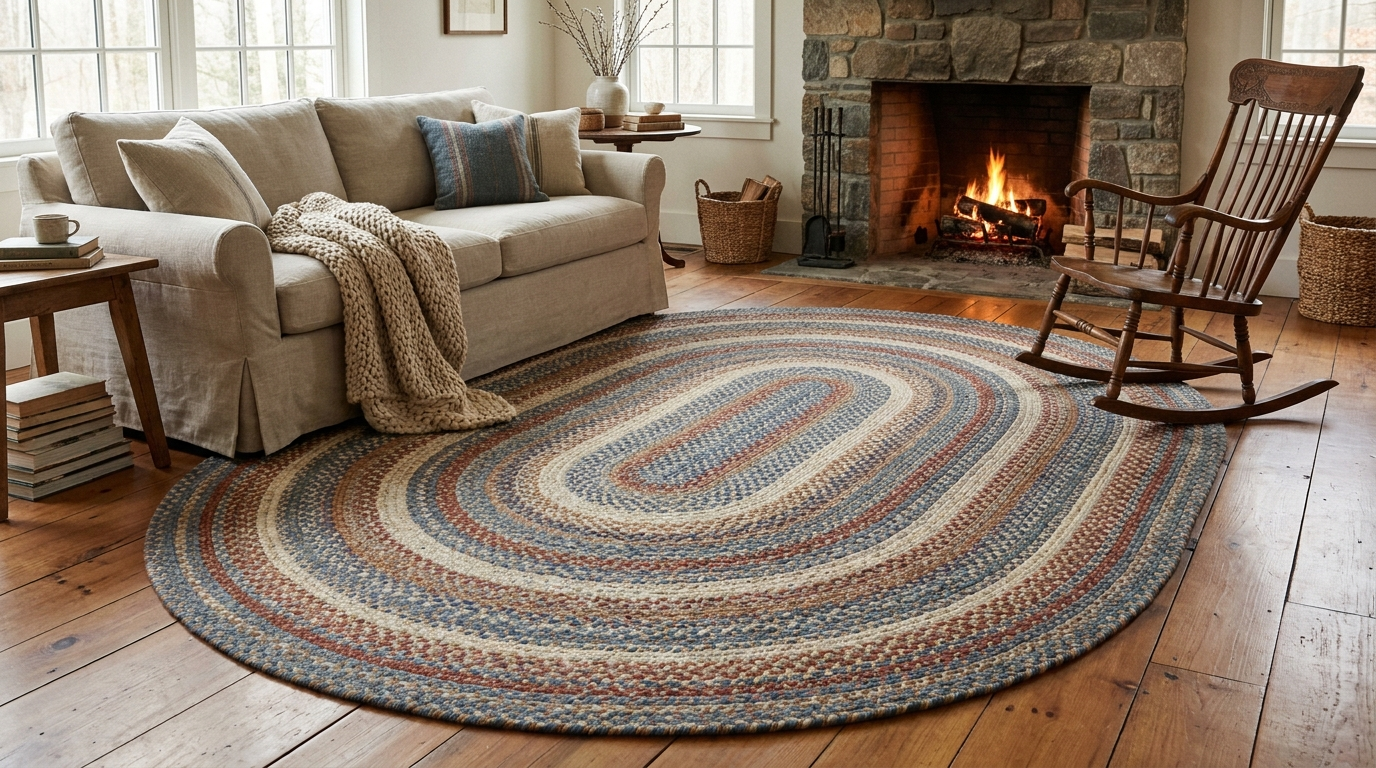
Wool Braided Rugs: Why They Last for Decades (and How to Choose Yours)
There's a reason wool braided rugs keep showing up in estate sales looking better than rugs bought five years ago: almost nothing in home decor is built to last the way they are. A well-made wool braided rug is reversible, repairable, and woven from a fiber that naturally resists stains, crushing, and fire. Many families quite literally pass them down.
If you're deciding whether a wool braided rug is worth the investment — or trying to choose between wool, cotton, and synthetic versions — this guide covers how they're made, where they work best, and how to care for one so it actually delivers on that multi-decade lifespan.
Why Wool Is the Best Material for Braided Rugs
Wool has a natural crimp — each fiber acts like a tiny spring. When furniture or foot traffic compresses the pile, the fibers bounce back instead of staying flat. That's why a 20-year-old wool braided rug can still look full while a synthetic rug shows traffic lanes in two or three years.
Wool also carries lanolin, a natural wax that coats each fiber and gives you a short window to blot spills before they soak in. And unlike most synthetics, wool is naturally flame-resistant — it chars rather than melts, which is why it's long been the fiber of choice near fireplaces and wood stoves. You can read more about the fiber's properties at The Woolmark Company.
A few more practical advantages:
- Insulation: Wool holds warmth underfoot in winter and stays cool in summer — noticeable on hardwood and tile floors.
- Sound dampening: The dense braid absorbs echo in open rooms and hallways.
- Natural and renewable: Wool is biodegradable and shorn from sheep annually, making it one of the most sustainable rug fibers available.
- Hides soil: The flecked, multi-tone look of braided wool disguises everyday dirt between vacuumings.
A Rug Style With Deep American Roots
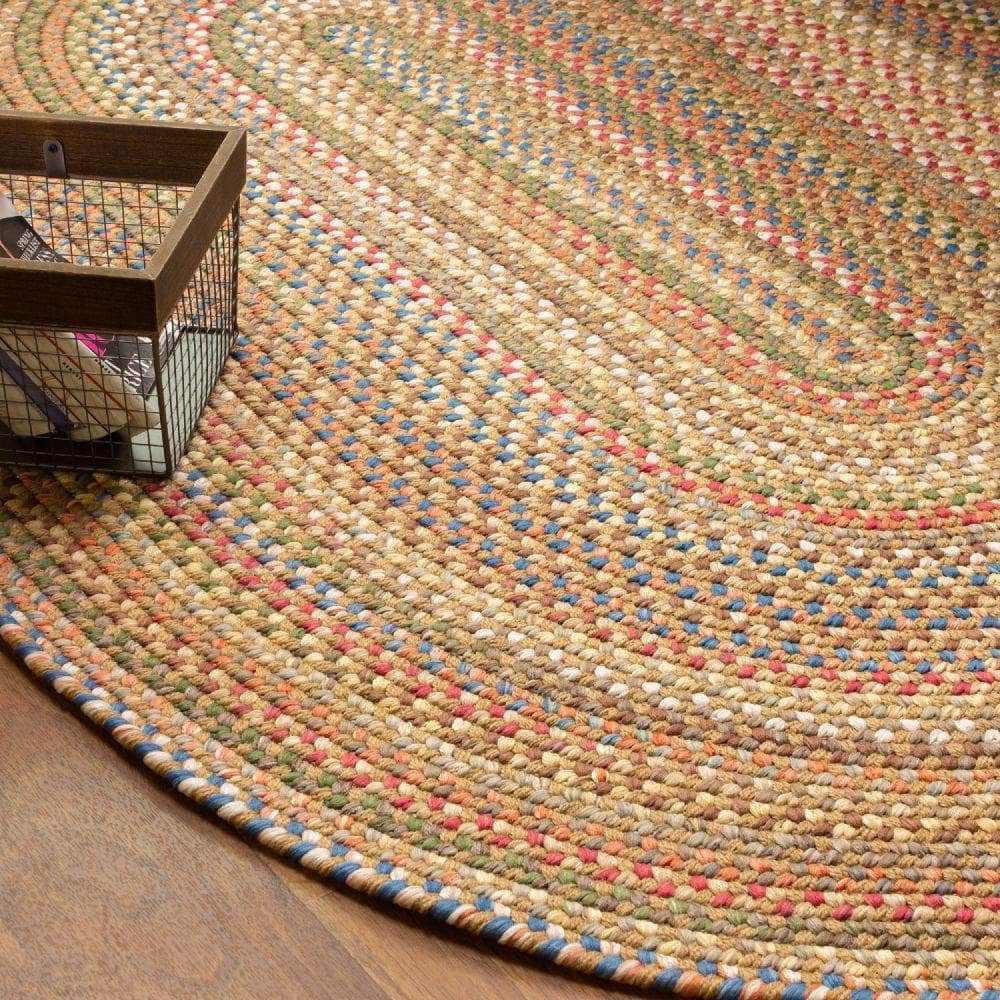
Braided rugs are one of the few rug styles that are authentically American. Colonial New England households braided strips of leftover wool clothing and blankets into sturdy floor coverings — thrift turned into craft. The technique has changed little in 200 years: strips of fabric are braided into a long rope, then the rope is coiled and stitched into a flat spiral. You can read a short history of the craft on Wikipedia.
That construction gives wool braided rugs their signature advantage: most are fully reversible. Flip the rug once or twice a year and you effectively double its lifespan, because wear spreads across two faces instead of one. Many of the best examples are still braided rugs made in the USA today — we wrote about why that craftsmanship matters in this earlier post.
Round, Oval, or Rectangular: Choosing a Shape and Size
Braided rugs come in more shapes than almost any other rug style, and the shape you pick changes how the room reads.
Oval
The classic. Oval braided rugs suit dining rooms, living rooms, and bedrooms where you want a traditional, farmhouse, or colonial feel. For a dining room, size the oval so chairs stay on the rug even when pulled out — usually 8x11 for a table that seats six.
Round
Round braided rugs shine under round dining tables, in entryways, and in kids' rooms. A 6-foot round works under a 42–48 inch table; go 8-foot for larger tables.
Rectangular
The most versatile for living rooms. Follow the standard rule: front legs of all seating on the rug. In most living rooms that means an 8x10; rooms over roughly 300 square feet usually call for a 9x12.
Runners
Braided runners are quietly one of the best hallway options available — the dense, low-profile braid handles the most concentrated foot traffic in the house.
Where Wool Braided Rugs Work Best
Because wool is resilient and hides soil, wool braided rugs are a smart pick for exactly the places delicate rugs fail: living rooms, dining rooms, hallways, stairs, and entry areas. The texture-forward, pattern-light look also fits current design direction — braided texture reads as "collected" rather than trendy, which is why the style pairs equally well with farmhouse, cottage, grandmillennial, and even modern interiors.
Two places to think twice: bathrooms and covered porches. Wool absorbs moisture, so for damp or outdoor spaces choose a polypropylene braided rug instead and save the wool for interior rooms. You can browse the full range of shapes, sizes, and fibers in our braided rug collection, or go straight to the wool braided rugs.
How to Clean a Wool Braided Rug
Wool braided rugs need surprisingly little maintenance, but the right routine matters:
- Vacuum weekly with the beater bar off (or on the highest setting). A spinning brush can catch and pull braid stitching.
- Flip the rug every 6–12 months to even out wear and sun fading.
- Blot spills immediately with a clean, dry white cloth. Work from the outside of the spill inward. Never scrub — it pushes liquid into the braid.
- Spot-clean with cold water and a small amount of mild, wool-safe soap. Avoid oxygen or chlorine bleach, which damage wool fibers.
- Expect some shedding at first. New wool rugs release loose fibers for a few weeks. It's normal and tapers off with regular vacuuming.
- For deep cleaning, use a professional rug cleaner experienced with wool. Skip steam cleaners and hot-water extraction machines, which can shrink wool and loosen stitching.
Use a quality rug pad underneath. It prevents slipping, cushions the braid against grinding wear, and protects hardwood floors.
Wool vs. Cotton vs. Polypropylene Braided Rugs
Wool is the durability and comfort leader: springy, warm, flame-resistant, and long-lived. It costs more upfront but usually costs less per year of use than anything else.
Cotton is softer, lighter, and often machine-washable in smaller sizes — a great choice for kitchens, kids' rooms, and casual spaces. It flattens faster than wool under heavy furniture. See our cotton braided rugs for washable options.
Polypropylene is the practical pick for porches, mudrooms, and homes with pets — it shrugs off moisture and cleans with a hose. It won't match wool's warmth or spring, but it goes where wool shouldn't.
Frequently Asked Questions
How long do wool braided rugs last?
With regular vacuuming, occasional flipping, and a rug pad, a quality wool braided rug commonly lasts 20–30 years or more. Reversible construction is the key — two wear surfaces instead of one.
Are wool braided rugs good for high-traffic areas?
Yes — they're one of the best choices. Wool's natural crimp resists crushing, and the tight braid construction stands up to hallways, stairs, and entryways better than most pile rugs.
How do you clean a braided wool rug?
Vacuum weekly without a beater bar, blot spills immediately with a dry cloth, and spot-clean with cold water and wool-safe soap. For deep cleaning, use a professional wool rug cleaner rather than a steam machine.
Do wool braided rugs shed?
New wool rugs shed loose fibers for the first several weeks. This is normal and diminishes with regular vacuuming — it's not a sign of a defect.
Can you use a wool braided rug outdoors?
No. Wool absorbs moisture and can mildew outdoors. For porches and patios, choose a polypropylene braided rug, which is UV- and moisture-resistant.
Are braided rugs reversible?
Most flat braided rugs are fully reversible. Flipping yours once or twice a year evens out wear and fading and can roughly double its usable life.
Final Thoughts
Wool braided rugs earn their reputation the honest way: a naturally resilient fiber, a reversible construction, and a style that's been at home in American houses for two centuries. Buy the right size, put a pad under it, flip it twice a year — and it may be the last rug you buy for that room.
Ready to find yours? Browse the full selection of wool braided rugs at Super Area Rugs, including American-made options in oval, round, and rectangular sizes.