
Article: Primitive Rugs: How to Choose the Right Rug for Primitive & Country Decor
Primitive Rugs: How to Choose the Right Rug for Primitive & Country Decor
Primitive decorating is built on things that look like they have been used, mended and handed down: a dough bowl on the table, a tin lantern, a dry sink worn smooth at the edges. Then you look down at the floor, and a glossy modern rug undoes the whole effect. The right primitive rug does the opposite. It quietly makes the room feel a hundred years older, in the best way.
Primitive rugs are not one specific product. The term covers several handmade American rug traditions that grew out of thrift, scrap bags and long winters, and today it also describes new rugs made to carry that same look. Knowing the difference between a hooked rug, a hit-or-miss braid and a penny rug makes it much easier to pick one that suits your home and how you live in it.
This guide covers what makes a rug "primitive," the main types, the colors and shapes that fit the style, and how to choose a primitive rug for each room, including the spots where an antique-style rug would not survive.
What Are Primitive Rugs?
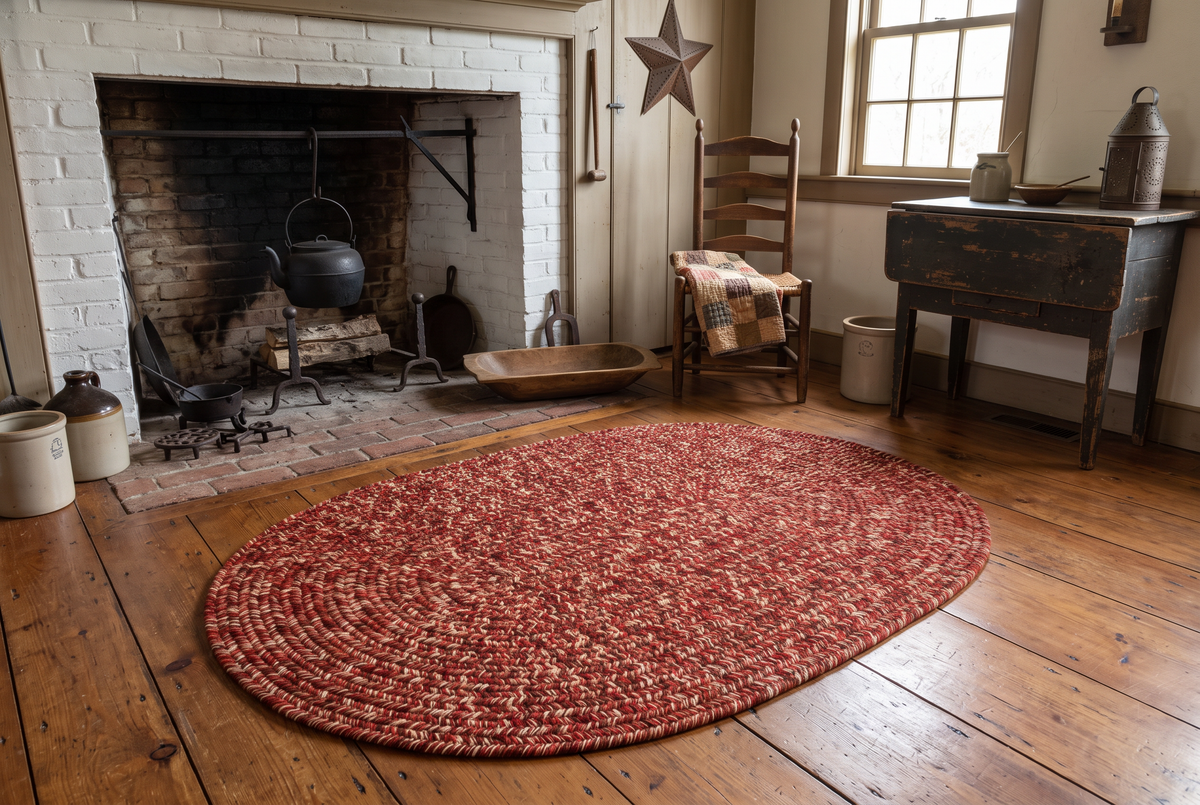
Primitive rugs are floor coverings in the style of early American folk art: simple, handmade-looking and a little imperfect. They are meant to suit primitive and country decor, which draws on the farm-made furniture and household goods of the 18th and 19th centuries, with darker, muted, warm colors and well-worn finishes.
Historically, these rugs were made at home from whatever was on hand. After factory-made carpet became available to wealthier households around 1830, families who could not afford it turned to their scrap bags instead. Worn coats, dresses and blankets were cut into strips and hooked, braided or stitched into rugs. That make-do origin is exactly where the "primitive" character comes from: uneven color, simple motifs and visible handwork.
A good modern primitive rug keeps those qualities while adding things the originals never had, such as consistent sizing, sturdier construction and, in some cases, the ability to go outdoors or into the kitchen without worry.
Types of Primitive Rugs
Hit-or-miss braided rugs
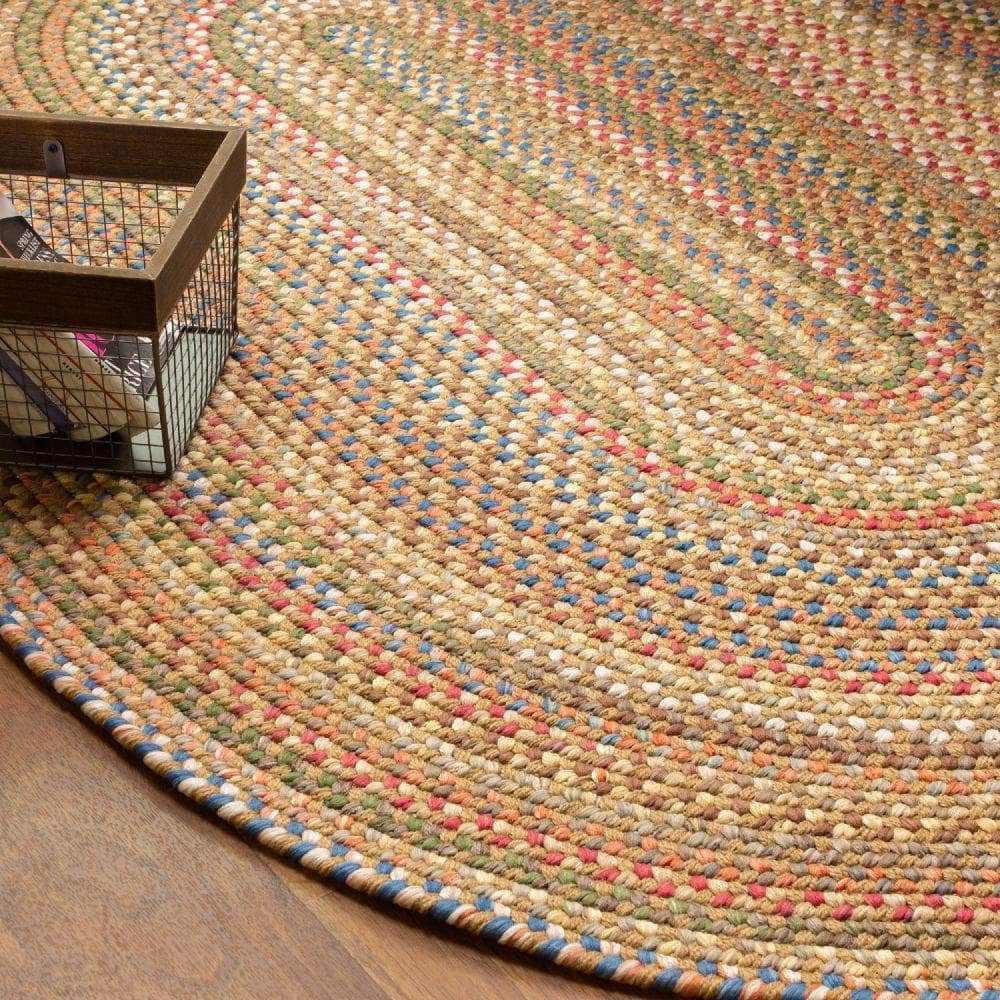
Braided rugs are one of the oldest American floor coverings. By the early 1800s, families were braiding strips of old wool clothing into coiled ovals and rounds. Because makers used whatever fabric they had, colors shifted from braid to braid with no planned pattern. That random look is called "hit-or-miss," and it is one of the most recognizable primitive rug styles.
Braided rugs are also the most practical primitive rug for everyday floors. They are flat, firm and reversible in many cases, so they handle foot traffic, chair legs and pets well. If you want the heritage look without buying a fragile antique, a braided rug is usually the best place to start. Our guide to the history and craftsmanship of braided rugs made in the USA goes deeper on how they are made.
Primitive hooked rugs
Hooked rugs are made by pulling loops of fabric strips up through a backing with a hook. The craft took hold along the Eastern Seaboard, especially in New England and the Canadian Maritimes, and burlap from grain and feed bags became the usual backing after about 1850. In the 1860s and 1870s, pre-printed patterns sold by makers such as Edward Sands Frost of Maine helped spread the craft.
In today's rug hooking world, "primitive" usually means wide-cut wool strips, about 3/16 to 1/2 inch wide, with simple, bold designs: barn stars, roosters, horses, saltbox houses, willow trees and folk florals. Hooked rugs are beautiful, but they are typically more delicate than braided rugs and are often used as wall hangings, hearth rugs or in low-traffic spots.
Penny rugs
Penny rugs are made from circles of wool or felt cut from old clothing and blankets, layered and joined with blanket stitching. Coins were used as templates for tracing the circles, which is where the name comes from. They became popular in the 1800s, and despite the name, many were never meant for the floor. They were used on tables, beds, dressers and mantels. Today they are mostly decorative accents rather than rugs you walk on.
Rag and woven rugs
Flat-woven rag rugs, made by weaving strips of cloth on a loom, are another scrap-bag tradition. They often feature stripes or hit-or-miss color and work nicely in bedrooms and as layered accents.
Primitive Rug Colors, Patterns and Shapes
Primitive decor favors darker, muted and warm colors, and rugs are no exception. The shades that read as primitive tend to look slightly faded or tea-stained rather than bright:
- Barn and brick reds
- Mustard and gold
- Olive, moss and sage greens
- Browns from mocha to dark chocolate
- Black and charcoal, often as a border or accent thread
- Muted blues such as denim and slate
- Oatmeal and tan as quieter neutrals
Pattern-wise, look for visible color variation, multicolor "hit-or-miss" blends, simple borders, and folk motifs if you go the hooked-rug route. Avoid high-gloss fibers, crisp geometric prints and bright, saturated colors, which all read as modern.
Ovals and rounds are the classic primitive shapes. They soften a room full of square furniture and look right at home in front of a hearth, under a round table or beside a bed. Runners work for hallways and in front of kitchen counters. Rectangles are fine too, especially under a sofa, but an oval almost always feels more old-fashioned.
How to Choose a Primitive Rug for Each Room
Living room and keeping room
Size the main rug so at least the front legs of your sofa and chairs sit on it; in most living rooms that means an 8x10 or 9x12. A dark, multicolor wool braided oval is the classic choice. If you love a hooked rug, use it as a smaller accent in front of the hearth or a reading chair rather than as the main rug. Our rug size guide walks through the measurements.
Kitchen
A small oval in front of the sink is one of the most familiar primitive details there is. Kitchens are hard on rugs, so pick a braid in a dark or multicolor colorway that hides spills, and consider an indoor/outdoor braided rug that is easier to clean than wool.

Dining room
Choose a rug that extends about 24 inches beyond the table on every side so chairs stay on it when pulled out. An oval braided rug under an oval or round table, or a rectangle under a long harvest table, both suit the style. Flat braids make it easy for chairs to slide in and out.
Bedroom
Pair a quilt-covered bed with a larger rug that extends 18 to 24 inches past each side of the bed, or keep it simple with two small ovals on either side. A rag rug or a softer wool braid feels good underfoot first thing in the morning.
Entryway, mudroom and porch
This is where an antique would fail fast and a modern primitive rug earns its keep. A 2x3 or 3x5 braided oval at the door, or a braided runner down the mudroom, catches dirt before it travels through the house. On a covered porch, use a rug made for outdoor use.

Antique vs. New Primitive Rugs
Antique hooked and braided rugs have real charm, but they come with trade-offs. They may be fragile, hard to clean, irregular in size and expensive to restore. They are best displayed on a wall, on a low-traffic floor or folded over a quilt rack.
New primitive-style rugs give you the look with predictable sizes and easier care. When shopping, check three things on the product page: the material (wool for warmth and resilience, cotton for a softer casual feel, or a synthetic made for indoor/outdoor use), whether the rug is reversible, and the care instructions, since cleaning methods vary a lot by material.
For example, the Rustic Living braided rugs at Super Area Rugs are made in the USA, rated for indoor and outdoor use, and reversible. They come in red, green, gray, beige, brown and blue, in sizes from a 20x30-inch oval up to a 10x13 oval, plus runners and rounds. That makes them an easy primitive pick for a kitchen sink, a mudroom or a covered porch.
Finishing the Primitive Look
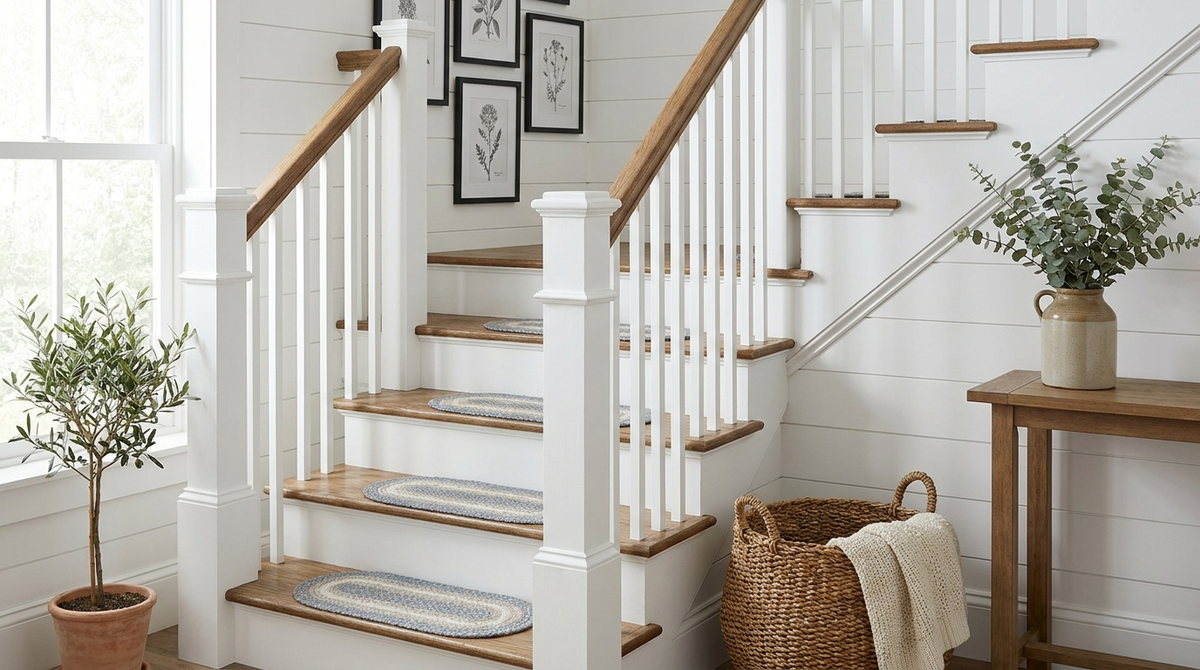
Primitive rooms look best when textures repeat. Braided chair pads on ladder-back chairs, braided stair treads on wooden stairs, and a braided basket by the hearth all echo the coiled texture of the rug. Keep accessories in the same muted palette and let a few well-chosen pieces carry the room rather than filling every surface. For more ideas on blending primitive and modern farmhouse styles, see our guide to farmhouse braided rugs.
Frequently Asked Questions
What is a primitive rug?
A primitive rug is a rug in the style of early American folk art, made to suit primitive or country decor. They usually have muted, warm colors and a handmade, slightly irregular look. Hooked rugs, hit-or-miss braided rugs, penny rugs and rag rugs are the most common types.
What is the difference between primitive and farmhouse decor?
Primitive decor is based on early American folk art and colonial-era furnishings, with darker colors and a worn, antique feel. Farmhouse decor is broader and usually lighter, mixing old pieces with painted wood, white walls and newer furniture. A primitive rug leans darker and more muted than a typical farmhouse rug.
What does "hit-or-miss" mean on a rug?
Hit-or-miss describes a random, unplanned mix of colors, the result of makers using whatever scraps they had. On a braided rug it means the colors change from braid to braid with no set pattern. It is one of the most traditional primitive looks.
Are braided rugs considered primitive?
Yes. Braided rugs are one of the original American scrap-bag rugs, made from recycled clothing since the early 1800s. A braided rug in muted, multicolor or hit-or-miss colors is one of the easiest ways to bring primitive style into a room.
Can you put a primitive rug in the kitchen?
Yes, as long as you choose one built for it. Skip antique or hooked rugs near the sink and choose a durable braided rug in a dark or multicolor colorway. An indoor/outdoor braided rug is the easiest to keep clean in a busy kitchen.
How do I clean a primitive braided rug?
Vacuum regularly with the beater bar turned off so the braids are not pulled, and blot spills right away rather than scrubbing. Rotate the rug every few months for even wear. Always follow the care label, since some braided rugs can be hand washed and others need spot cleaning only.
Final Thoughts on Choosing Primitive Rugs
The best primitive rugs look handmade, wear muted colors and fit the way you actually use each room. Save delicate hooked and penny rugs for walls and quiet corners, and rely on a sturdy hit-or-miss or multicolor braided rug for the floors that see real life. Get the size right, choose a material that matches the room, and the rest of your primitive decor will fall into place.
When you are ready to find yours, browse the braided rugs collection at Super Area Rugs, including our made-in-USA braided rugs. As a family-owned rug shop, we are always happy to help you choose the right size and color for your home.