
Article: Farmhouse Braided Rugs: How to Get the Classic Country Look in Every Room
Farmhouse Braided Rugs: How to Get the Classic Country Look in Every Room
Walk into almost any farmhouse kitchen worth remembering and you will find one underfoot: a round or oval rug made of coiled braids, a little softer at the edges, colors that look like they were pulled from a feed-store calendar. Farmhouse braided rugs have been part of the American home for about two hundred years, and they still do something few other rugs can. They make a room feel lived-in the day you put them down.
The trick is choosing one that fits the version of farmhouse you actually live in. A rug that looks perfect in a primitive keeping room can feel heavy in a bright modern farmhouse, and the wrong size can make even a beautiful braid look like an afterthought.
This guide covers what makes a braided rug read as "farmhouse," how the primitive and modern farmhouse looks differ, which material and shape to pick, and exactly how to use braided rugs room by room, from the kitchen sink to the front porch.
Why Farmhouse Braided Rugs Feel So at Home
Braided rugs are a farmhouse original, not a trend that borrowed the look. In the late 1700s, Americans covered wooden floors with braided straw mats. By the early 1800s, New England wool mills had made wool cheap and plentiful, and families began braiding strips of worn-out coats, trousers and dresses into floor coverings instead. They were warmer, prettier and more durable than straw, and far cheaper than a store-bought carpet.
Because makers used whatever fabric was on hand, early rugs often had a "hit-or-miss" pattern: colors that changed with each braid and a thread of black wool running throughout, since dark overcoats and suits were the most common scraps. That slightly irregular, make-do character is exactly what people are after when they search for a farmhouse braided rug today.
A few qualities carry that heritage into a modern rug:
- Natural-looking texture. The rounded braid gives a flat, nubby surface that reads as handmade, not glossy or plush.
- Soft, earthy color. Think barn red, moss, oatmeal, mocha, denim blue and charcoal, often blended within a single braid.
- Simple shapes. Ovals and rounds are the classic farmhouse forms; rectangles came later and suit modern layouts.
- Everyday toughness. Braided rugs were made to be walked on in muddy boots, and a well-made one still is.
Farmhouse, Primitive or Modern Farmhouse: Know Your Look
"Farmhouse" gets used for several related styles. Knowing which one you are decorating in makes it much easier to choose colors and patterns.
Classic farmhouse
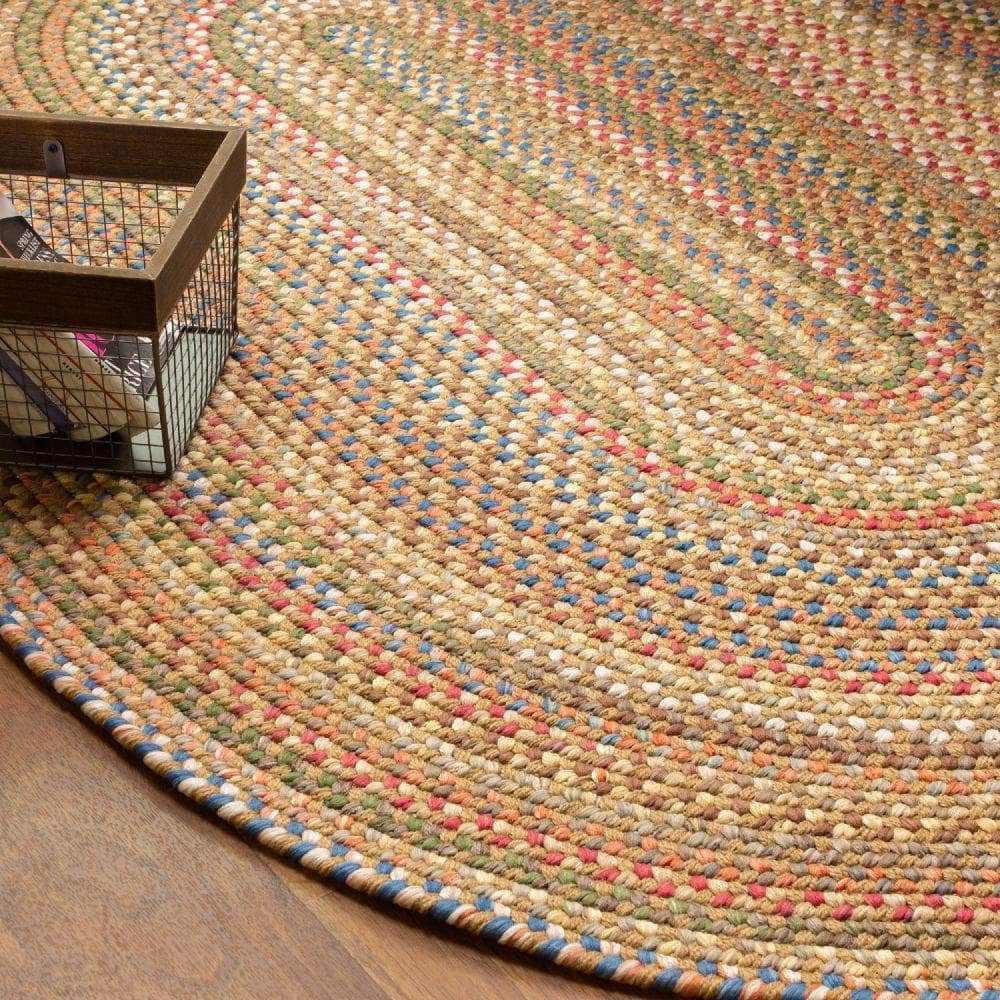
Painted wood, open shelving, a big dining table and a mix of old and new. Here a multicolor oval braided rug is right at home. Look for warm, blended colorways with a darker border to anchor the room.
Primitive and country decor
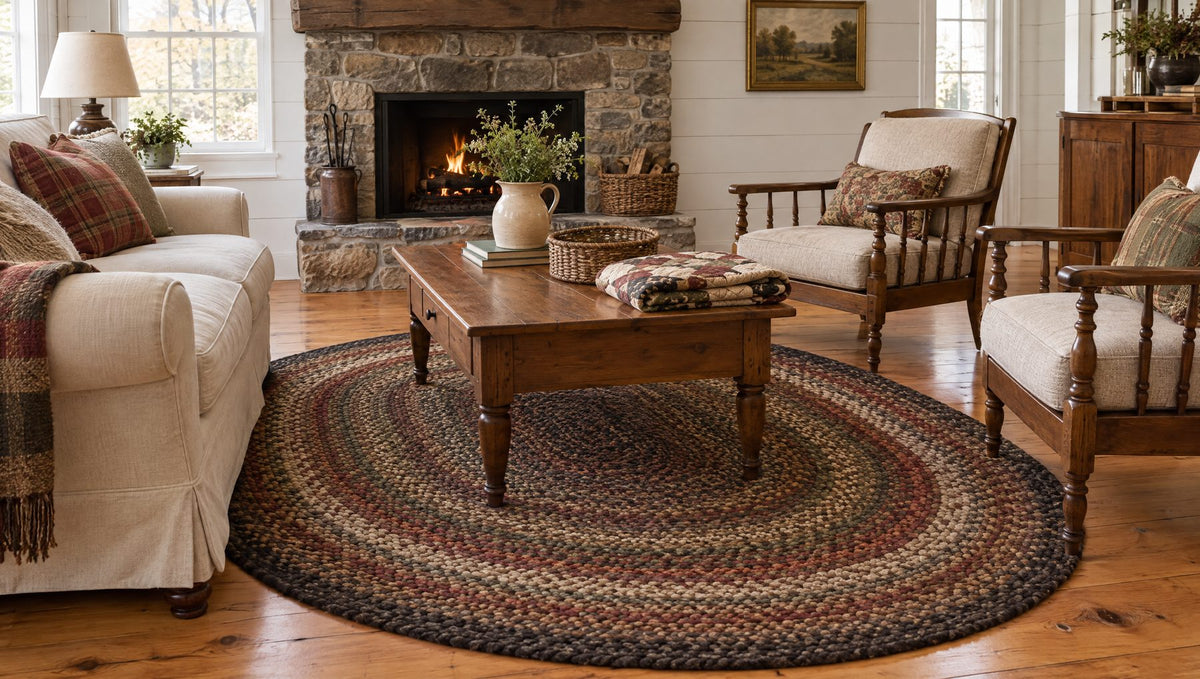
Primitive decorating draws on folk art and early Americana, especially the farm-made furniture of the mid-18th to early 19th century, with muted colors, weathered finishes, crocks, barn stars and tea-stained linens. Primitive rugs lean darker and more muted: deep reds, mustard, olive, brown and black. A hit-or-miss braid or a rug with visible color variation from braid to braid fits this look better than a tidy solid.

Modern farmhouse
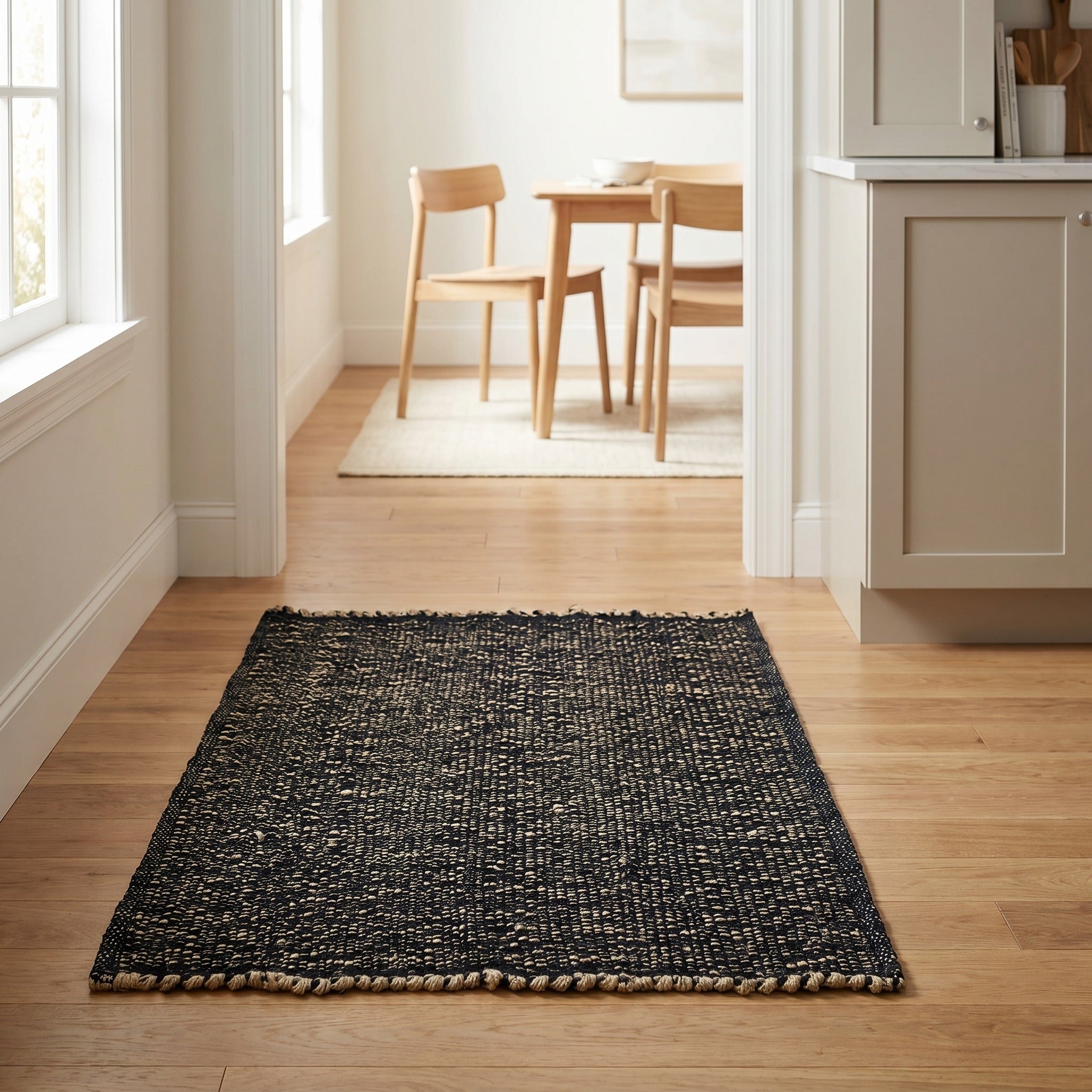
White walls, black hardware, shiplap and lots of natural light. Modern farmhouse rooms want a quieter braid: solid or tonal neutrals such as sand, gray, ivory or a single strong color like black or navy. A rectangular braided rug often suits these cleaner lines better than an oval.

How to Choose a Farmhouse Braided Rug
Pick the material for the room
Wool is the traditional choice and the one most people picture. It is naturally resilient, feels warm underfoot and ages gracefully, which makes it ideal for living rooms, bedrooms and dining rooms. Our guide to wool braided rugs goes deeper on why they last.
Cotton and cotton-blend braids are lighter, often more casual, and a good fit for bedrooms, kids' rooms and cottage-style spaces.
Polypropylene braided rugs are the practical pick for kitchens, mudrooms, porches and anywhere that sees water or sun. Polypropylene resists moisture and UV fading, so it can handle a covered porch or a busy back door without losing its color.
Choose a shape
Ovals soften a room full of right angles and are the most traditional farmhouse shape. They work especially well under round or oval dining tables, in front of a hearth, and beside a bed. Rounds make a cozy focal point in a reading nook or small entry. Rectangles line up neatly with sofas and sectionals and suit modern farmhouse rooms.
Settle on color
Pull one or two colors from things that are already in the room, like a quilt, painted cabinets or the brick of a fireplace, and let the rug repeat them. Multicolor braids are forgiving with kids, pets and farm-country dirt. If you need help narrowing it down, see our guide to choosing a braided rug color.
Farmhouse Braided Rugs Room by Room
Living room
Size up so that at least the front legs of your sofa and chairs sit on the rug. In most living rooms that means an 8x10 or larger; a small oval floating in the middle of the floor is the most common farmhouse mistake. An oval in front of a wood stove or fireplace is a classic look, but use it as a second, smaller rug, not the one that holds the seating area together. Our rug size guide has the full breakdown.
Kitchen
A small braided oval, around 20x30 inches or 2x3 feet, in front of the sink is one of the most recognizable farmhouse details there is. For galley kitchens or long islands, a braided runner covers more of the work zone. Choose polypropylene or a dark multicolor braid here so spills and dropped flour do not show.

Dining room
Make sure the rug extends at least 24 inches past the table on every side so chairs stay on it when pulled out. An oval rug under an oval or round table, or a rectangle under a farmhouse trestle table, is the cleanest match. Braided rugs are flat and firm, so chairs slide over them more easily than over a plush pile.
Bedroom
For a quilt-and-iron-bed kind of room, place a larger rug so it extends 18 to 24 inches beyond each side of the bed, or keep it simple with a pair of small ovals on either side. Softer wool or cotton braids feel best under bare feet first thing in the morning.
Entryway, mudroom and porch
Braided rugs have been catching mud at the back door for generations. A 2x3 or 3x5 at the entry, or a runner down a mudroom, traps grit before it travels through the house. On a covered porch, stick with polypropylene. You can browse more weather-ready options in our outdoor rugs collection.

Finishing Touches: Stair Treads, Chair Pads and Baskets
The farmhouse look is about repetition, and braided accessories are an easy way to carry the rug's colors through the house. Braided stair treads add grip and cushioning to wooden stairs and quiet footsteps. Matching braided chair pads tie kitchen or dining chairs to the rug below. Braided wool baskets hold blankets, toys or firewood kindling and echo the same coiled texture. Several of our braided collections, including Cherry Hill, offer rugs, stair treads, chair pads and baskets in coordinating colorways, so it is easy to match the whole room.

Caring for Your Braided Rug
A little routine care keeps a braided rug looking good for years:
- Vacuum regularly with the beater bar or brush roll turned off, or use a suction-only attachment, so the braids and stitching are not pulled.
- Blot spills right away with a clean, damp cloth. Do not scrub, which can fuzz the fibers.
- Rotate the rug every few months so sun and foot traffic wear it evenly. Many braided rugs are reversible, which doubles their life.
- Use a rug pad on hard floors to stop slipping and reduce wear. Our rug pad guide explains which type to choose.
- Always check the care label before washing or deep cleaning, since care depends on the material.
Frequently Asked Questions
Are braided rugs farmhouse style?
Yes. Braided rugs are one of the original American farmhouse floor coverings, made from recycled clothing and fabric scraps since the early 1800s. Their texture, earthy colors and oval shapes are central to both classic and modern farmhouse decor.
What is a primitive rug?
A primitive rug is one that suits primitive or country decor, a style based on early American folk art and farm-made furnishings. These rugs usually have muted, darker colors and a handmade, slightly irregular look. Hit-or-miss braided rugs and hooked rugs are the most common types.
What size braided rug do I need for a farmhouse living room?
Most living rooms need an 8x10 or larger so the front legs of the sofa and chairs rest on the rug. Smaller ovals work well as accent rugs in front of a fireplace or reading chair, but not as the main rug.
Oval or rectangular: which braided rug shape is more farmhouse?
Oval is the traditional farmhouse shape and works beautifully under round tables and in kitchens and bedrooms. Rectangular braided rugs suit modern farmhouse rooms and line up better with sofas and sectionals. Choose the shape that echoes your furniture.
Can I use a braided rug in the kitchen or on a porch?
Yes. Choose a polypropylene braided rug for kitchens, mudrooms and covered porches, because it resists moisture and fading. Wool braids are best kept to drier rooms such as living rooms, bedrooms and dining rooms.
Final Thoughts on Farmhouse Braided Rugs
The best farmhouse braided rugs match both your room and your version of farmhouse: muted, hit-or-miss braids for primitive spaces, warm multicolor ovals for classic farmhouse, and quiet neutrals or rectangles for modern farmhouse. Get the size right, pick wool for comfort or polypropylene for high-mess spots, and repeat the look with stair treads, chair pads or a basket or two.
When you are ready to find yours, browse the braided rugs collection at Super Area Rugs. As a family-owned rug shop, we are always happy to help you pick the right size and color for your home.