
Article: Rug Pads: Do You Really Need One? Types, Thickness & Sizing Guide
Rug Pads: Do You Really Need One? Types, Thickness & Sizing Guide
A rug pad is the least glamorous thing you will ever buy for your home, and quite possibly the most useful. It is the difference between a rug that slides an inch every time someone walks across it and a rug that stays exactly where you put it. It is also the difference between a rug that wears out in five years and one that still looks good in fifteen.
This guide covers what a rug pad actually does, the three material types worth considering, how to pick a thickness, and how to size a pad correctly. If you are shopping now, you can browse our rug pads collection alongside this guide.
Do You Really Need a Rug Pad?
Short answer: yes, in almost every situation. Here is what a pad is doing under there.
1. It keeps the rug from moving
This is the reason most people finally buy one. A rug that shifts underfoot is annoying, and on a hard floor it is a genuine trip hazard. Rugs and loose flooring are a well-documented contributor to falls at home, which is why fall-prevention guidance from groups like the CDC and the National Safety Council consistently calls out securing loose rugs. A gripping pad handles this without adhesive, tape, or damage to the floor.
2. It extends the life of the rug
Every step you take on an unpadded rug grinds the fibers directly against a hard floor. The pad absorbs that compression instead. Over years of daily traffic, this is the single biggest factor in whether a rug's pile stays upright or crushes flat in the walking lanes. The Carpet and Rug Institute has long pointed to cushioning as a major factor in floor covering longevity, and the same logic applies to area rugs.
3. It protects the floor
A quality pad is a buffer between grit trapped in the rug backing and your hardwood or vinyl. It also prevents the color transfer and adhesive residue that cheap PVC-coated pads are notorious for leaving behind on finished floors.
4. It makes the rug feel better
A thin flatweave over a felt pad feels like a much more expensive rug. This is the upgrade people notice immediately and did not expect.
5. It helps with sound and warmth
Padding dampens footstep noise, which matters in apartments and upstairs rooms, and it adds a small amount of insulation on cold floors.
The Three Types of Rug Pad
Felt pads: cushion first
Dense recycled felt, typically needle-punched into a firm mat. Felt gives you the most cushion and the best floor protection, and it is the right choice under heavy furniture because it will not compress permanently the way foam does.
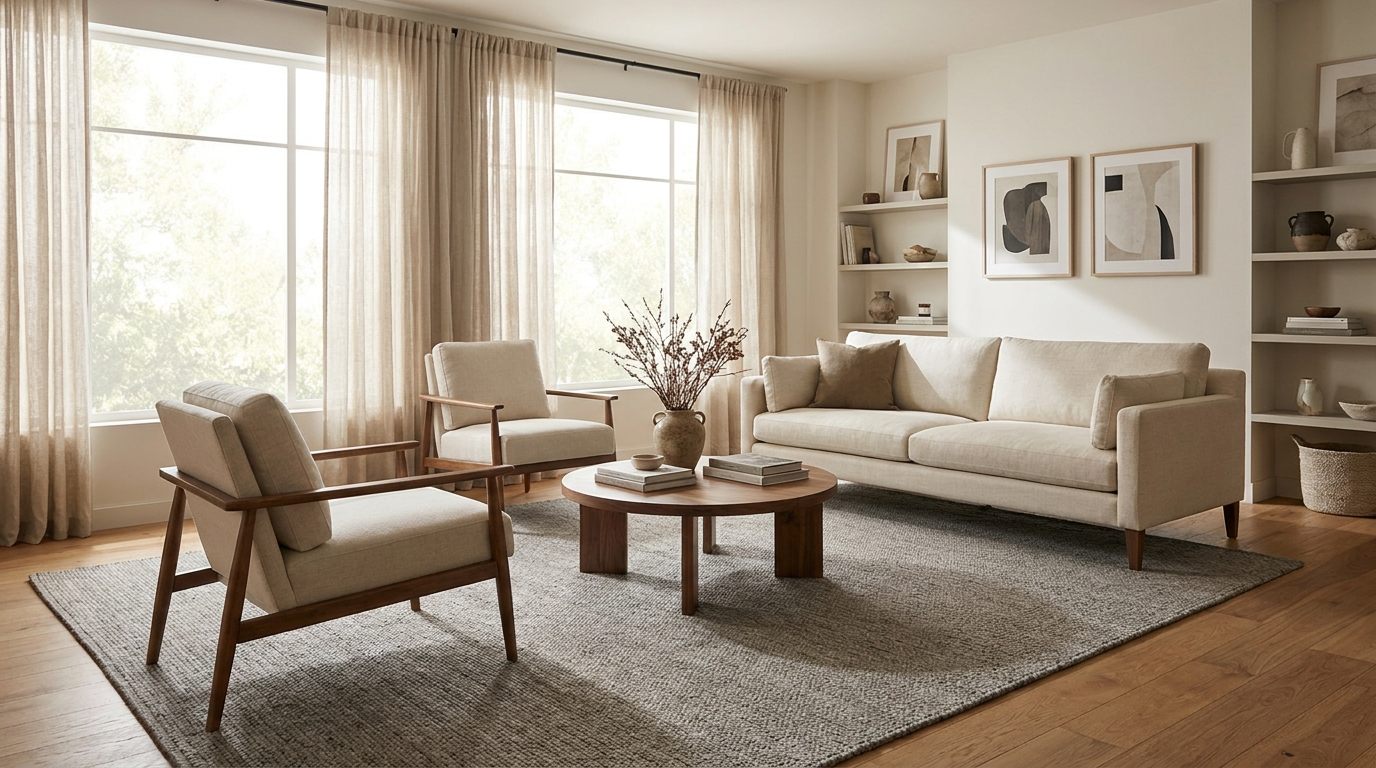
What it does not do is grip. Felt alone works well under a large rug that is weighted down by a sofa and coffee table, or under a rug placed on top of carpet. On a bare floor with nothing holding it down, a felt-only pad will let the rug travel.
Best for: large living and dining room rugs anchored by furniture, wool rugs, and any situation where floor protection is the priority.
Natural rubber pads: grip first
A thin open-weave or solid sheet of natural rubber that holds fast to hard floors. These are low profile, usually about 1/16" to 1/8", so they add almost no height. That makes them the right pick under doors, in entryways, and beneath thin flatweaves where a thick pad would create a hump.
One important distinction: natural rubber versus PVC or synthetic "non-slip" mesh. The cheap plastic mesh pads sold in big-box stores break down within a couple of years, turn gummy, and can leave a sticky residue or discoloration on finished hardwood. Natural rubber does not. If a pad's price seems too good to be true, check what it is actually made of.
Best for: runners, entryway rugs, kitchen rugs, small rugs, and any rug with no furniture on it.
Felt-and-rubber pads: the default recommendation
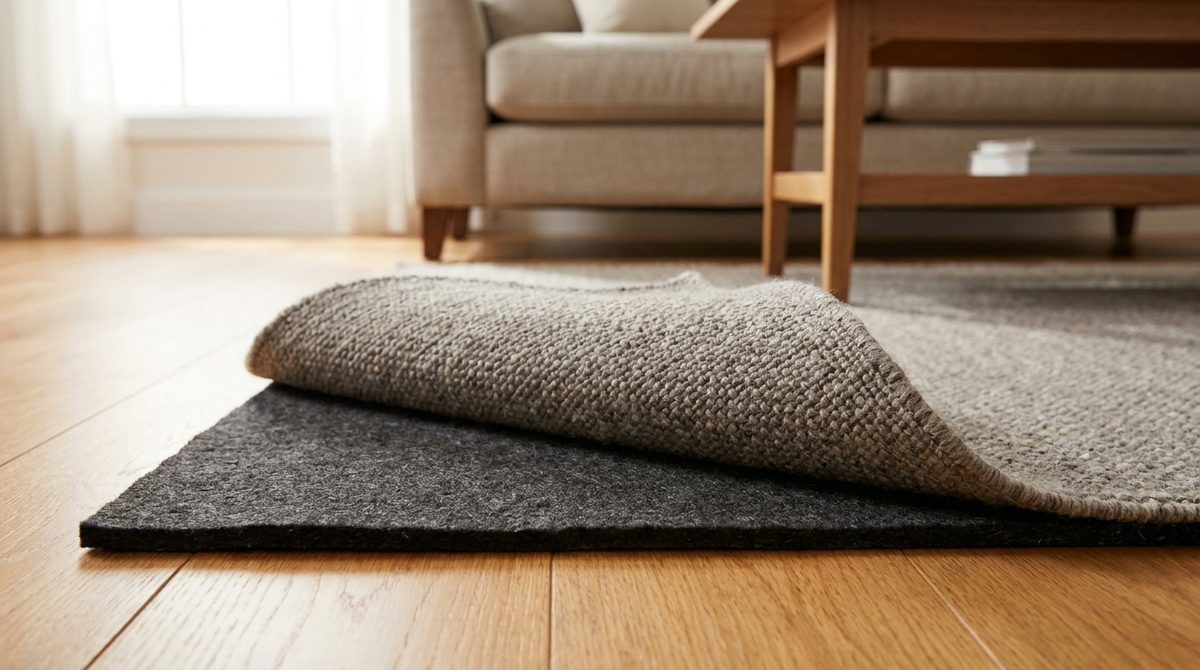
A felt top layer bonded to a natural rubber bottom. You get cushion and grip in one product. For most rooms in most homes, this is the pad to buy, and it is why it has become the standard recommendation from rug retailers.
Best for: nearly everything — bedrooms, living rooms, dining rooms, offices, and any rug on a hard floor.
Choosing a Thickness
Thickness is a trade-off between comfort and clearance. Use the room, not the rug, to decide.
- 1/16" to 1/8" (rubber only) — Doorways, entryways, under low-clearance doors, and beneath thin flatweaves or machine washable rugs. Grip without bulk.
- 1/4" (felt-rubber) — The all-purpose choice. Enough cushion to feel noticeably better underfoot, thin enough that it will not interfere with most doors or create a tripping lip at the rug edge. If you are unsure, buy this.
- 3/8" to 1/2" (felt or felt-rubber) — Bedrooms, nurseries, playrooms, and anywhere you want plush. Also good under thin rugs you want to feel substantial. Check your door clearance first.
Two thickness cautions. In a dining room, thick padding makes chairs harder to slide in and out — stay at 1/4" or thinner. And under heavy furniture, very thick pads can compress unevenly and leave permanent dents, so dense felt at a moderate thickness beats soft foam at a greater thickness every time.
How to Size a Rug Pad
The rule is simple: the pad should be about one inch smaller than the rug on all sides. For an 8' x 10' rug, that means a pad of roughly 7'10" x 9'10".
The reason is that a pad which reaches the exact edge will eventually peek out, and a visible pad edge looks unfinished and catches feet. Leaving the rug's outer inch to lie flat on the floor gives you a clean, tapered edge.
Pads are easy to trim. Felt and felt-rubber both cut cleanly with sharp scissors or a utility knife and a straightedge, so buying the next size up and trimming down is a completely normal approach — especially for oval, round, and odd-size rugs. Lay the rug face-down, place the pad on top, trace an inch inside the rug's outline, and cut.
If you are still deciding on rug dimensions in the first place, our rug size guide walks through the right size for each room, and the living room rug guide covers furniture placement in detail.
Special Situations
Rug on top of carpet
Rubber does not grip carpet — it needs a hard surface to hold. For a rug over carpet, you want a pad specifically made for the job, typically a dense felt or a textured pad designed to grab carpet pile. Keep it thin; adding a thick pad on top of already-soft carpet creates an unstable, spongy surface that is more likely to buckle.
Wool and braided rugs
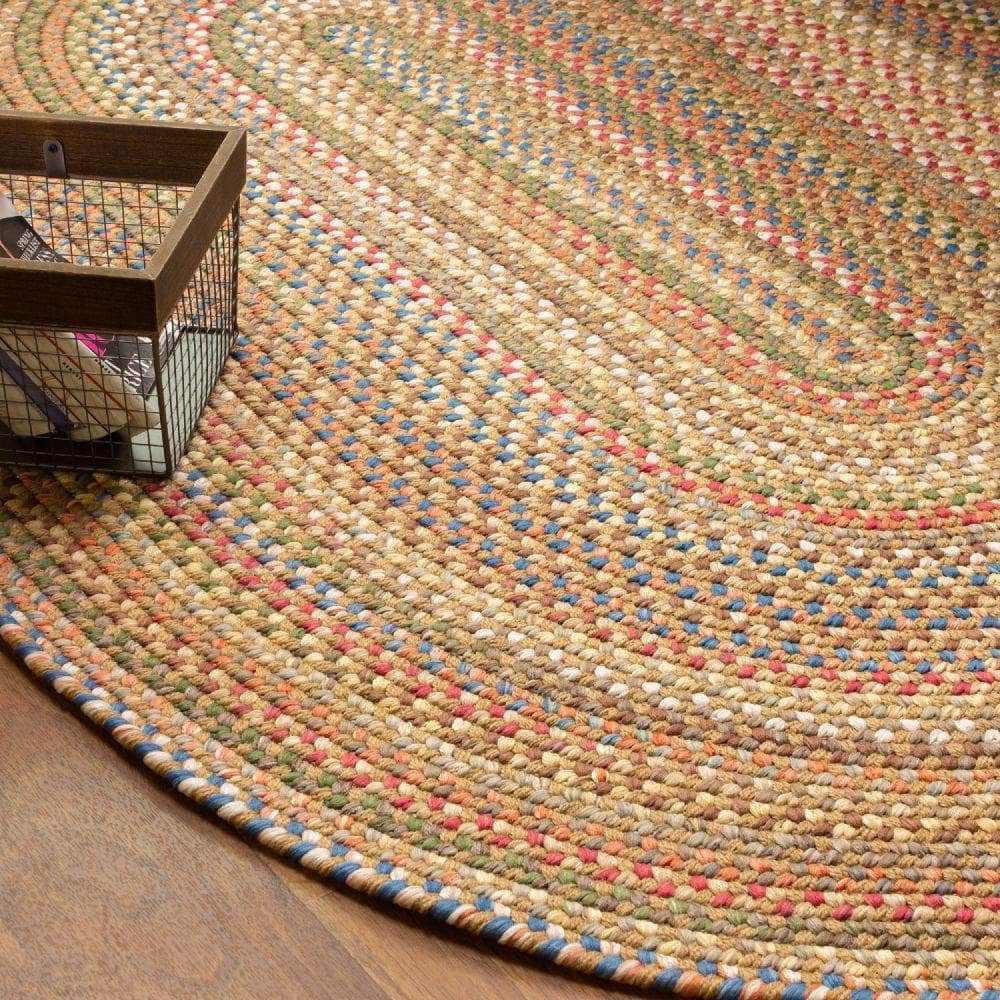
Natural fiber rugs benefit most from padding because their construction relies on the fibers staying lofted. A dense felt pad under a wool rug or a braided rug keeps the braids from flattening and helps the rug lie flat as it relaxes into place.
Jute and natural fiber rugs
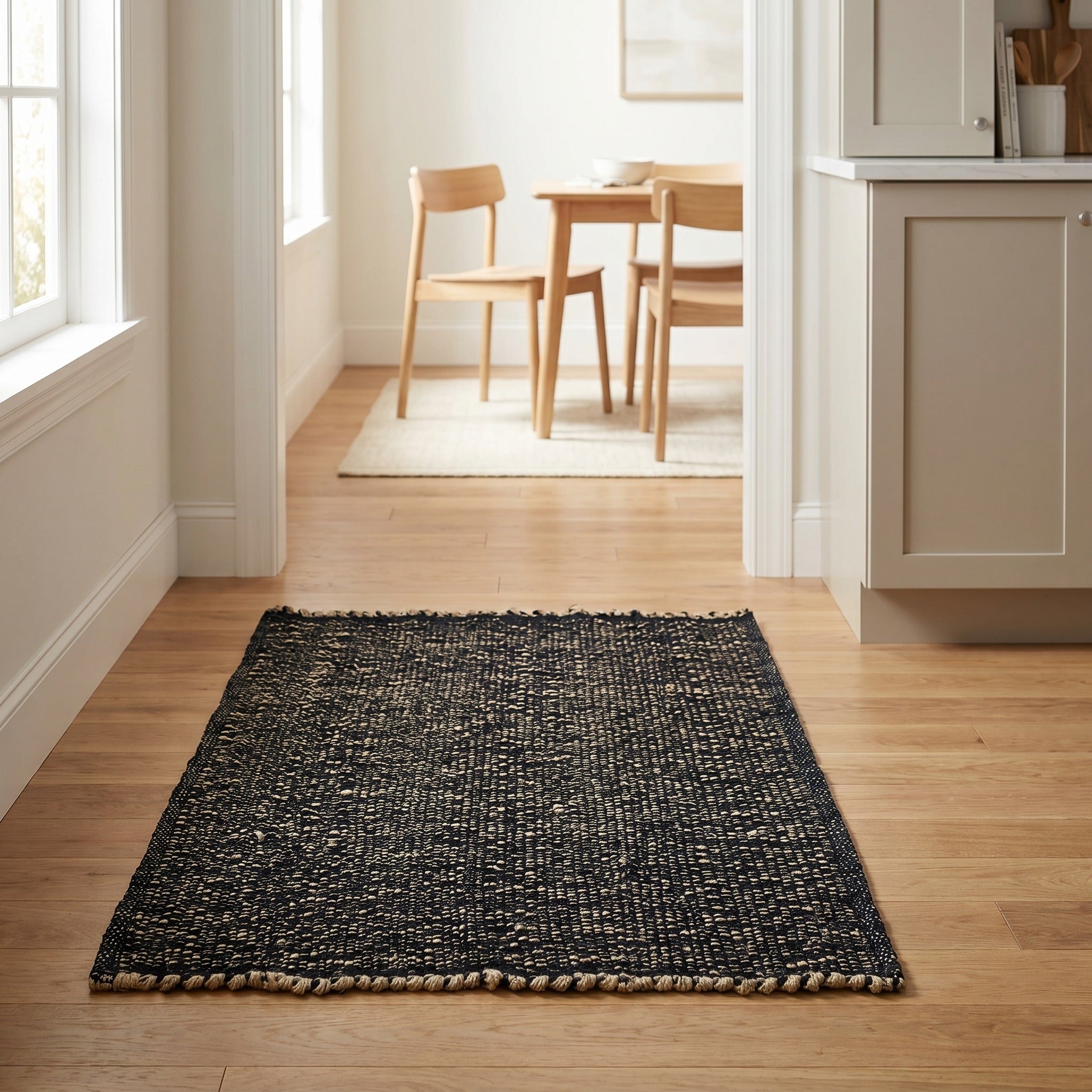
Jute and sisal have coarse, stiff backings that are hard on floors. A pad is close to mandatory under a jute or natural fiber rug, both to protect the finish beneath and to soften a rug type that is not naturally comfortable underfoot.
Outdoor rugs
Skip felt entirely. Felt holds water, and trapped moisture under an outdoor rug is how you get mildew and stained decking. Use an open-weave rubber pad that drains and lets air move, and lift the rug periodically to let the surface underneath dry out.
Radiant heated floors
Use a thin, breathable pad. Thick felt insulates, which is exactly the opposite of what you want over radiant heat, and it can cause the system to run harder than it needs to.
Caring for a Rug Pad
A good felt-rubber pad should last a decade or more, but it is not maintenance-free.
- Vacuum underneath once or twice a year. Grit works its way down through the rug and collects on the pad, where it grinds against both the rug backing and the floor.
- Let new floors cure. Wait at least four weeks after a hardwood floor is refinished before laying a rug and pad on it. Covering an uncured finish can cloud or discolor it.
- Replace a pad that has gone hard or sticky. This is the failure mode of cheap PVC pads. If yours is tacky to the touch or has started shedding crumbs, take it out before it marks the floor.
- Shake and air it out when you clean the rug, especially in humid climates.
The Short Version
If you want one recommendation to act on: buy a 1/4" felt-and-natural-rubber pad, cut one inch smaller than your rug on all sides. That combination handles the overwhelming majority of rooms and rugs, and it costs a small fraction of what the rug itself did.
The pad is not the part anyone sees. It is the part that decides how long the rug you did choose carefully is going to last.
Browse our rug pads to find the right size, or explore the full area rug collection if you are still shopping for the rug itself. If your current rug is sliding right now and you need a fix today, we also put together five simple solutions to keep a rug from sliding.