
Article: Jute Rugs: Pros, Cons, Care & How to Choose the Right One
Jute Rugs: Pros, Cons, Care & How to Choose the Right One
Walk into almost any room that feels calm and grounded, and there's a good chance there's a jute rug under the furniture. Jute rugs have become the quiet workhorse of natural decor — neutral enough to go with anything, textured enough to keep a beige room from falling flat, and priced well below wool.
But jute isn't right for every room, and the mistakes people make with it are predictable. Put one in the wrong spot and you'll be replacing it in two years. Put one in the right spot and it'll outlast three sofas.
Here's what jute actually is, where it performs, where it fails, and how to pick and care for one so it lasts.
What Is a Jute Rug, Exactly?
Jute is a plant fiber, harvested from the stalks of the Corchorus plant grown mostly in India and Bangladesh. The stalks are soaked, the long fibers stripped out, dried, spun into yarn, and then woven or braided into rugs. It's one of the oldest and most widely produced natural fibers in the world — second only to cotton in volume.
What that means in your living room: jute yarn is thick, slightly irregular, and takes dye poorly, which is why most jute rugs show up in their natural range of oatmeal, wheat, honey, and soft gray-brown. The color variation you see across a single rug isn't a defect. It's the plant.
Jute rugs generally come in three constructions:
- Flat basketweave — chunky yarn woven in a checkerboard grid. The most common look, and the most texture-forward.
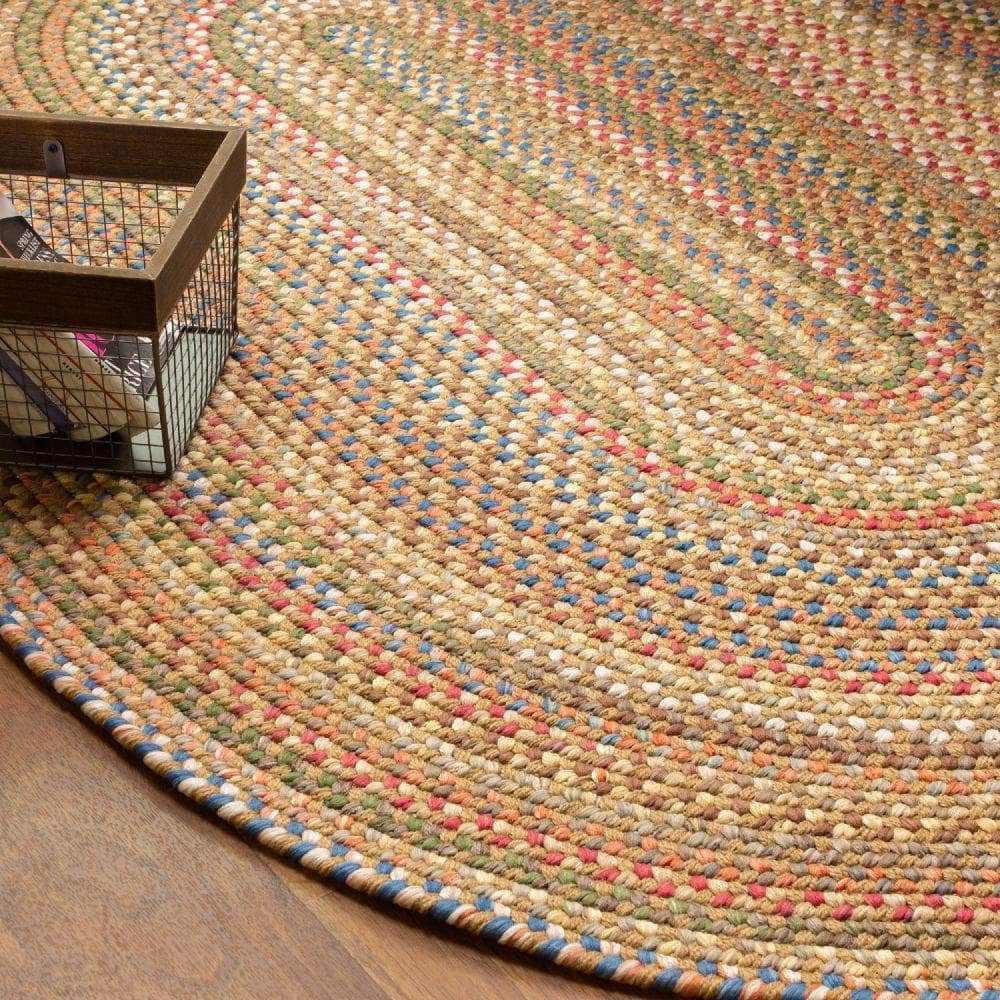
- Braided — jute rope coiled and stitched into ovals, rounds, or rectangles. Denser and more forgiving underfoot. See our natural jute braided rugs.
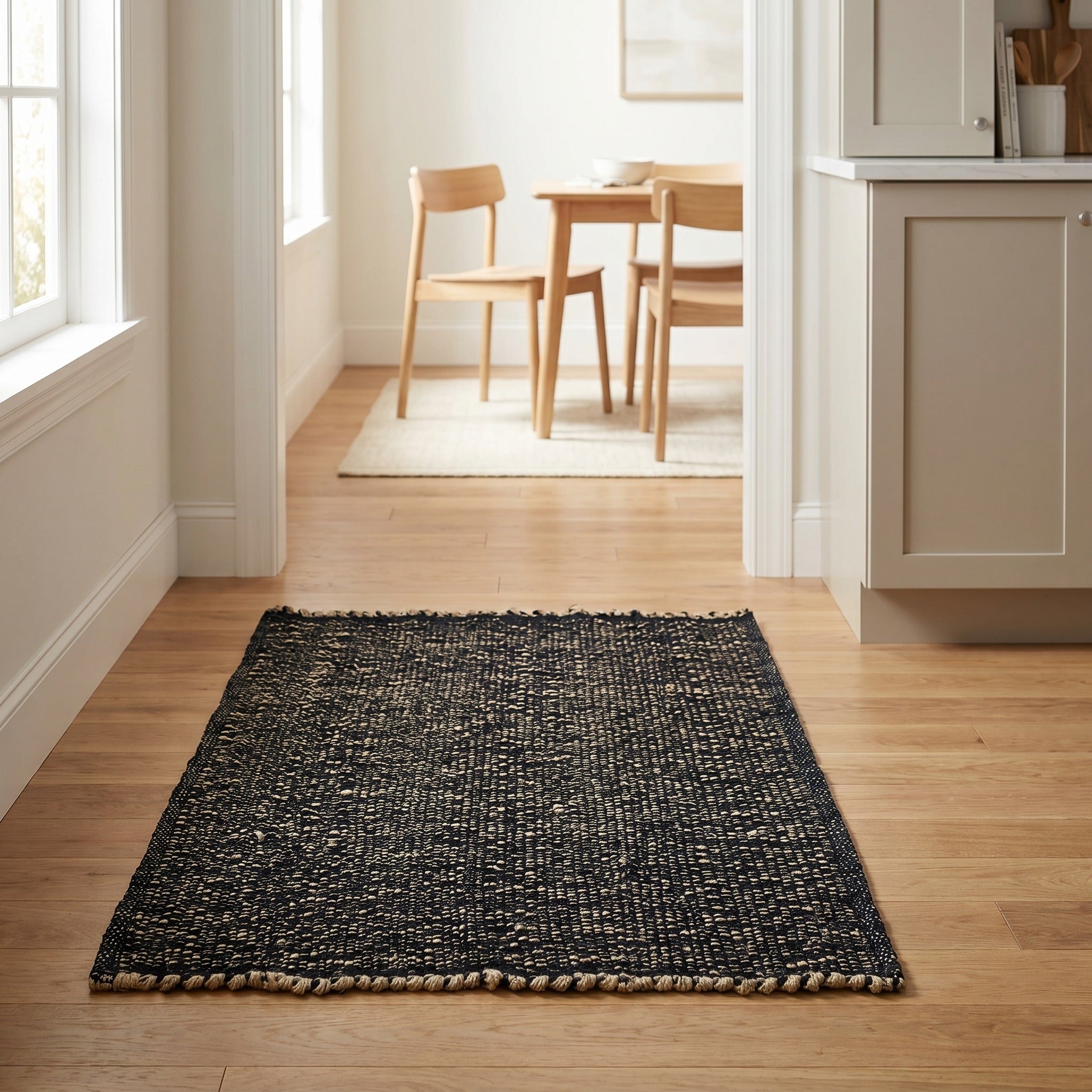
- Blended — jute spun alongside cotton or chindi for softness and a bit of color. Our Terra jute & chindi rugs are built this way.
Jute Rug Pros and Cons
What jute does well
- Texture that makes a neutral room work. A flat, dyed synthetic rug in oatmeal reads as boring. The same color in jute reads as intentional, because the weave carries the visual interest.
- Price. An 8x10 jute rug typically lands well under what the same size costs in hand-tufted wool.
- It's a renewable crop. Jute grows fast, needs little irrigation or pesticide, and biodegrades at the end of its life. If you're trying to cut synthetics out of your home — a worthwhile goal given how much time most of us spend indoors, as the EPA's indoor air quality guide points out — natural fiber is a straightforward swap.
- It hides dirt. The mottled tan color and uneven texture are far more forgiving of everyday traffic than a solid light-colored rug.
- It plays well with every style. Coastal, farmhouse, boho, Scandinavian, traditional — jute reads as neutral in all of them, which is why it keeps showing up in the rug trends designers keep reaching for.
Where jute falls short
- It hates water. This is the big one. Jute absorbs moisture readily, and wet jute browns, stains, and can develop mildew. Standing water is a rug-killer.
- It isn't plush. Jute is firm. Pleasant to walk on barefoot, not something you'd want to lie down on.
- It sheds at first. New jute rugs release loose fiber for the first few weeks. More on that below.
- Spills need immediate attention. You cannot let a glass of red wine sit on jute and deal with it tomorrow.
- It can snag. Pet claws and vacuum beater bars can pull loose strands from a basketweave.
Jute vs. Sisal vs. Seagrass: How Natural Fibers Compare
These three get lumped together constantly, and they behave very differently.
| Fiber | Feel underfoot | Durability | Moisture tolerance | Best for |
|---|---|---|---|---|
| Jute | Softest of the three | Moderate | Poor | Living rooms, bedrooms, low-moisture spaces |
| Sisal | Coarse, scratchy | Very high | Poor | Hallways, stairs, high-traffic areas |
| Seagrass | Smooth, slightly slick | High | Best of the three | Sunrooms, porches, humid climates |
The short version: if you want the most comfortable natural fiber, pick jute. If you want the most bulletproof, pick sisal. If moisture is a concern, pick seagrass — or skip natural fiber entirely.
Where to Put a Jute Rug (and Where Not To)
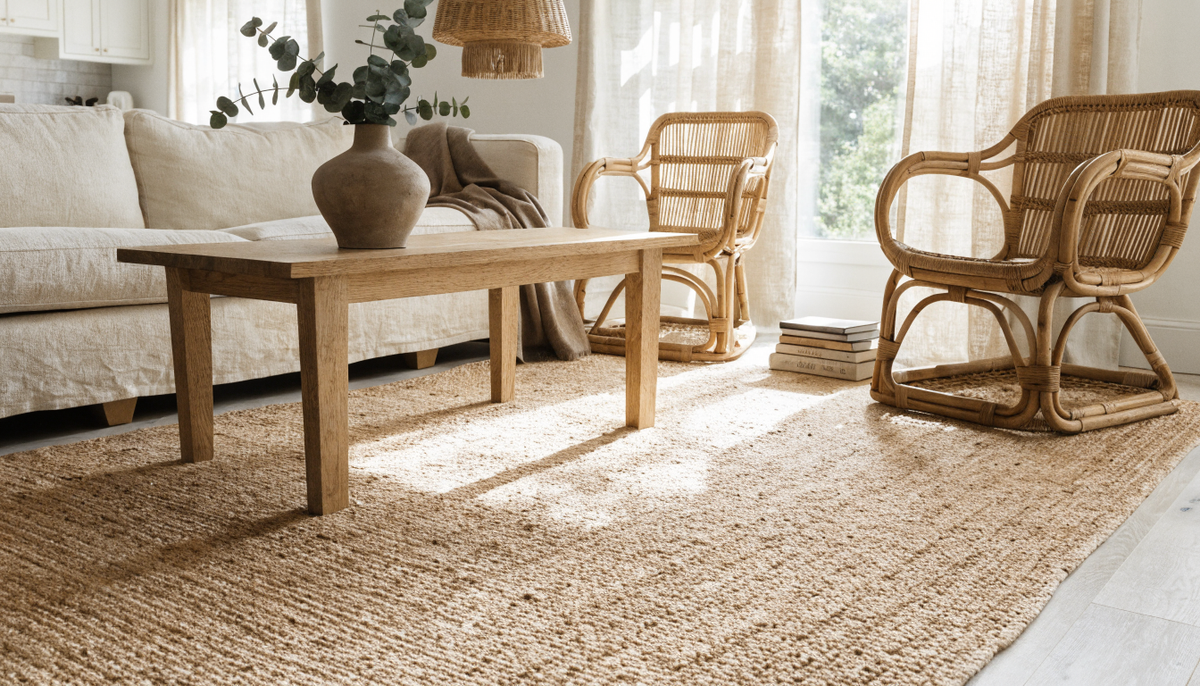
Living room — yes. This is jute's best room. Traffic is moderate, spills are manageable, and the texture does real work in a space that's usually full of upholstery. Size it so the front legs of your sofa and chairs sit on the rug; our complete living room rug guide walks through the layouts in detail.
Bedroom — yes, with a caveat. Jute under a bed looks beautiful and wears almost nothing, since most of the rug lives under the mattress. The caveat is bare feet on a cold morning: jute is firm, not cozy. Many people layer a sheepskin or a small soft rug on the walking side. Sizing rules are in our bedroom rug guide.
Dining room — usually no. Food and drink land on dining rugs constantly, and jute is the worst natural fiber for that. If you want the natural look under a table, a jute-cotton blend or a washable option is the safer call. See how to choose a dining room rug.
Entryway — no. Snow, rain, and road salt will destroy a jute rug in a single winter. Put a machine washable rug there instead.
Kitchen — no. Same reason. Water near a sink and jute are a bad pairing. A washable runner is the right tool for that job.
Bathroom or basement — absolutely not. Humidity alone is enough to cause problems.
Hallway — it depends. A jute runner works in a dry interior hallway. Skip it in a hall that connects to an exterior door. Browse runner rugs for the full range.
Are Jute Rugs Soft? What to Expect Underfoot
Jute is the softest of the common natural fibers, but "softest natural fiber" is a low bar. Expect something closer to a firm woven mat than to carpet. Barefoot, it's pleasant and grippy. Sitting on it for an hour, less so.
Two things genuinely change how a jute rug feels:
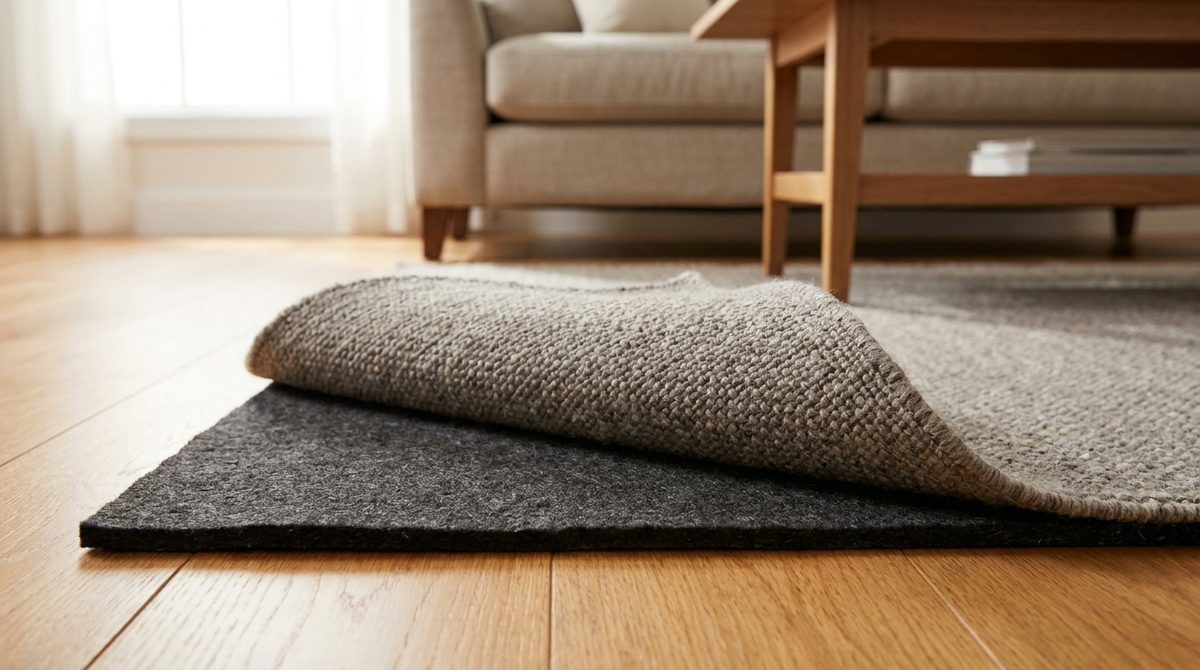
A rug pad. This is the single biggest upgrade. A quality pad adds real cushion, keeps the rug from sliding, and protects the floor underneath. It also extends the rug's life by absorbing foot-traffic compression that would otherwise grind the fibers. Our rug pads come in several thicknesses — and our rug pad guide explains which one you actually need.
A cotton blend. Jute spun with cotton or chindi is noticeably softer than pure jute, with a bit more color to work with.
Choosing the Right Jute Rug: Size, Weave, and Shape
Size first, always. The most common rug mistake isn't material or color — it's buying too small. Standard sizes run 2x3, 3x5, 4x6, 5x8, 6x9, 8x10, and 9x12. For a standard living room, 8x10 is usually the floor, not the ceiling. Our rug size guide covers every room.
Weave for traffic. A tight, dense braid holds up better in a busy room than an open basketweave, which can snag. If the rug is going somewhere with real foot traffic, go denser.
Shape for the room. Round jute rugs work beautifully under a round dining table or in a reading nook — see round area rugs. Ovals soften square rooms, which is part of why braided rugs in oval shapes have stayed popular for two centuries.
Style to match. If your room leans rustic, the Cozy Cabin rustic farmhouse jute rugs and our broader farmhouse braided collection are a natural fit. You can see the full natural fiber range in our Natural Fiber and Jute Rugs collection.
How to Clean a Jute Rug
The governing rule for jute care: keep it dry. Everything below follows from that.
- Vacuum regularly — suction only. Turn the beater bar off, or use a suction-only setting. A rotating brush pulls fibers loose from a basketweave. Vacuum both sides a few times a year; grit works its way through the weave and abrades fibers from underneath.
- Blot spills immediately. Press a dry white cloth straight down. Don't rub, don't scrub, and don't use a colored cloth — dye can transfer into damp fiber.
- Spot clean with as little liquid as possible. Lightly dampen a cloth with mild detergent solution, work from the outside of the spot inward, then blot dry. The Carpet and Rug Institute's care guidance is worth reading on technique — blot, never scrub.
- Dry it fast. After any damp cleaning, run a fan on the area. Jute that stays wet browns and can mildew.
- Never steam clean or shampoo it. Saturating jute is how you ruin it. If a rug needs a deep clean, use a dry-cleaning method or a professional who explicitly handles natural fiber — the CRI's Seal of Approval program is a reasonable starting point for vetting products and cleaners.
One more habit that matters: rotate the rug 180 degrees every six months. Sun fades jute unevenly, and traffic wears it unevenly. Rotating evens out both.
Do Jute Rugs Shed?
Yes — and then mostly they stop.
New jute rugs release loose fiber left over from spinning and weaving. You'll see tan fuzz along the edges and on the floor around the rug for roughly the first two to six weeks. Vacuum two or three times a week during that window and it tapers off substantially.
Shedding never quite reaches zero on a natural fiber rug, but it drops to a level most people stop noticing. If any shedding at all is a dealbreaker, a jute-cotton blend or a washable rug is the better choice.
Frequently Asked Questions
Are jute rugs durable?
Moderately. In a living room or bedroom, a good jute rug will give you many years of service. In an entryway, a wet mudroom, or under a dining table with small kids, it will wear out fast. Jute's durability is entirely about where you put it — sisal is the more durable natural fiber for punishing spots.
Are jute rugs good with pets?
They're workable but not ideal. The color hides fur well, but claws can snag a loose basketweave, and pet accidents are a serious problem because jute holds moisture. A tight braid handles claws better than an open weave. If accidents are likely, choose washable.
Can you put a jute rug on carpet?
Yes. Use a thin rug pad designed for carpet-over-carpet so the jute doesn't creep or wrinkle. Layering a textured jute over low-pile carpet is a common way to define a seating area in a rental.
Why is my jute rug turning brown in spots?
That's almost always water damage. When jute gets wet, natural compounds in the fiber wick to the surface and oxidize as it dries — the result is a brownish halo. Prevent it by drying any damp area quickly with a fan. Once it's set, it's very difficult to reverse.
Do jute rugs smell?
A new jute rug often has a faint earthy, hay-like smell from the natural fiber. It fades within a week or two with normal air circulation. A persistent musty smell is different — that signals moisture, and the rug needs to dry out.
What's the best rug pad for a jute rug?
A felt-and-rubber pad. The felt layer adds cushion that jute lacks on its own; the rubber layer grips the floor so the rug stays put. Skip thin PVC-mesh pads, which can break down and leave residue on hard floors.
Final Thoughts
Jute rugs earn their popularity: affordable, genuinely beautiful, renewable, and neutral enough to survive three redecorations. The one thing you have to respect is water. Keep a jute rug in a dry room, put a good pad under it, vacuum with the beater bar off, and blot spills the moment they happen — and it'll look better in five years than most synthetic rugs look in one.
Ready to shop? Browse the full Natural Fiber and Jute Rugs collection at Super Area Rugs, or explore our handmade braided rugs if you want the natural look with a denser, longer-wearing construction — the same construction logic behind wool braided rugs that last for decades.