
Stair Runners vs. Stair Treads: How to Choose, Measure & Install
Stairs take more abuse than almost any other surface in the house. Every trip up and down puts your full weight on a few inches of wood, usually in socks, often in a hurry. That is why stair runners and stair treads are among the most searched rug categories in the country, and why so many people ask the same question before buying: which one is right for my stairs?
This guide explains the difference between a stair runner rug and carpet stair treads, how to measure for each, what materials hold up best, and how to install them so they stay put. If you just want to see options, browse our braided stair treads or our full runner rugs collection.
Stair Runners vs. Stair Treads: What's the Difference?
A stair runner is one continuous strip of rug that runs down the center of the staircase, covering each tread (the part you step on) and each riser (the vertical face between steps). It is held in place with tack strips, staples, or stair rods, and it reads as a single design element from top to bottom.
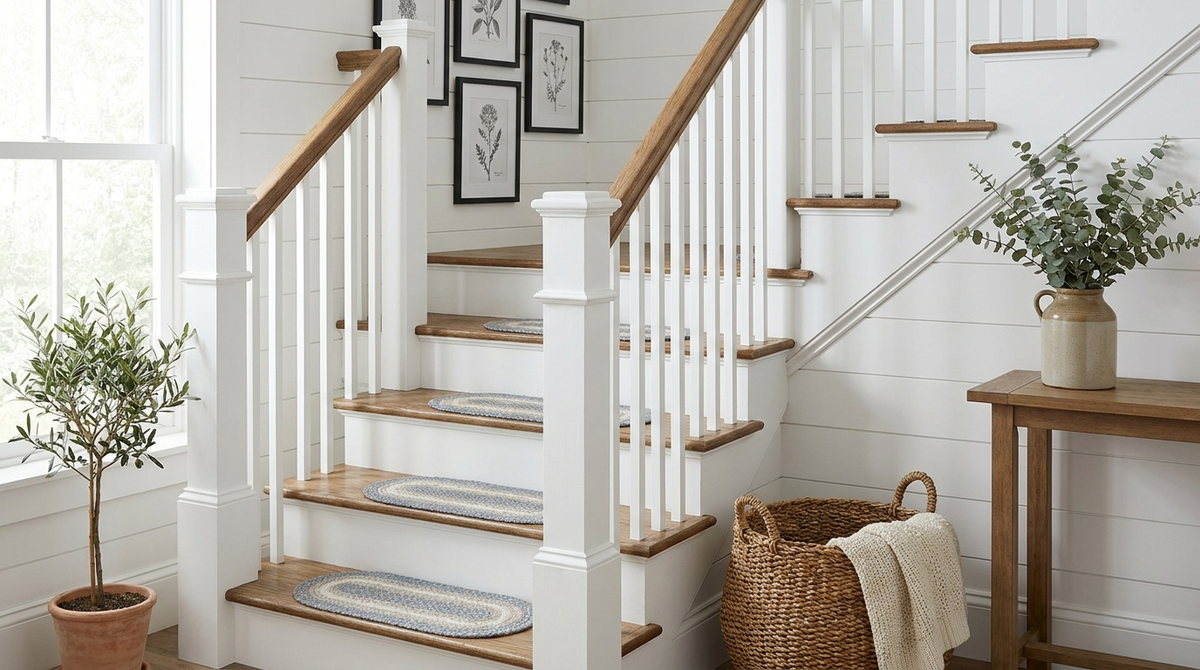
Stair treads are individual rugs, one per step, that cover only the horizontal tread. They sit on the step, leave the riser bare, and attach with double-sided tape or adhesive strips. Most are sold singly, in sets of 4, or in sets of 13 (the most common number of steps in a standard U.S. staircase).
| Feature | Stair Runner | Stair Treads |
|---|---|---|
| Coverage | Treads and risers, continuous | Treads only, one rug per step |
| Installation | Tack strips, staples or rods; often a pro job | Tape or adhesive strips; DIY in under an hour |
| Renter friendly | Rarely | Yes, removable without damage |
| Cleaning | Vacuum in place; spot clean | Lift off and wash or shake out individually |
| Replacing a worn section | Replace the whole runner | Replace a single tread |
| Look | Tailored, formal, traditional | Casual, farmhouse, shows off the wood |
| Typical cost | Higher (material plus installation) | Lower, especially in sets |
The short answer: choose a stair runner if you want a continuous, tailored look and you are willing to commit to a permanent installation. Choose stair treads if you want traction, quiet and floor protection with a quick DIY install, easy cleaning, and the option to swap colors later.
Why Cover Your Stairs at All?
Safety and traction
Polished hardwood stairs are slippery, especially in socks or with a pet racing ahead of you. Falls are the leading cause of injury for adults 65 and older, and roughly 1 in 4 older adults reports a fall each year, according to the CDC's older adult falls data. Adding a textured surface to each step is one of the simplest changes you can make, and the CDC's fall prevention guidance covers other home changes worth pairing with it, like good lighting and handrails on both sides.
Pets
Dogs, particularly older dogs and long-bodied breeds, often struggle for grip on bare wood steps. Stair treads for dogs are a popular search for a reason: a braided tread gives paws something to grab, and individual treads are easy to lift off and wash when muddy paws strike.
Noise
Footsteps on hardwood stairs echo through the whole house. A runner or a set of treads absorbs much of that sound, which matters most in open-plan homes and when stairs sit next to bedrooms.
Protecting the wood
The center of each step takes almost all the wear. Covering that strip keeps the finish from dulling and saves an expensive refinish.
How to Measure for Stair Treads
- Measure the depth of a tread from the front edge (the nosing) to the back where it meets the riser. Most residential stairs are 9 to 11 inches deep.
- Measure the width of the step from side to side.
- Pick a tread that leaves an even border. A standard 8" x 28" tread fits most 36-inch-wide stairs with about 4 inches of wood showing on each side, which is the look most people want.
- Count your steps, including any landing steps. If you have 13 steps, a set of 13 is the most economical way to buy. Set aside one spare if you can; it lets you rotate a worn tread later.
Place each tread so its back edge sits flush against the riser. That keeps the front edge back from the nosing, which is safer than letting a rug hang over the lip of the step.
How to Measure for a Stair Runner
- Width: plan for 3 to 4 inches of exposed wood on each side. On a 36-inch staircase, that means a runner about 27 to 30 inches wide.
- Length: measure one tread (depth) and one riser (height) and add them together. Multiply by the number of steps. Add about 1 to 2 inches per step if the runner will wrap a rounded nosing.
- Turns and landings need their own measurements and usually a professional fitter, because the runner must be cut and mitered.
For more on sizing rugs throughout the house, see our rug size guide.
Best Materials for Stairs
Wool
Wool is the classic choice for stair runners and stair treads, and for good reason. Wool fibers are naturally resilient, so they spring back under foot traffic instead of flattening, and they resist soiling better than most synthetics. The Woolmark Company has more on why wool performs the way it does. Our Pura Solid, Tribeca, and Cherry Hill stair treads are wool braided styles, and you can see the rug versions in our wool rugs collection. We also explain why wool braided rugs last for decades.
Nylon and polypropylene blends
Synthetic blends are tough, colorfast, and easy to clean, which makes them a good fit for busy family staircases. Treads like our Roxbury and Ridgewood braided stair treads use a nylon and polypropylene blend and are reversible, so you can flip them for twice the wear.
Cotton and natural fibers
Cotton braids are soft and casual, and jute or sisal runners bring natural texture. They work well on low-traffic stairs but show wear faster on main staircases. If you love the look, our guide to jute rugs: pros, cons and care covers what to expect.
Why Braided Stair Treads Work So Well
Braided construction is tightly wound and dense, so it grips the foot, cushions each step, and holds its shape for years. The oval and rectangle shapes suit both traditional and farmhouse homes, and our stair treads come from Rhody Rugs, a braided-rug specialist. Many lines are sold as matching rugs too, so you can coordinate the stairs with the entry or hallway. Browse our braided rugs and Made in USA braided rugs to find a match, or read why American craftsmanship matters.
Planning a country look throughout the house? Our farmhouse braided rugs styling guide shows how to carry the style from the stairs into every room, and the farmhouse braided rugs collection pulls the best options together.
How to Install Stair Treads (Step by Step)
- Clean each step. Vacuum, then wipe with a damp cloth to remove dust and polish residue. Let it dry fully; adhesive will not bond to a dusty or waxy surface.
- Dry fit. Lay every tread in position first, back edge against the riser, centered side to side. Use a tape measure to keep the side borders even from top to bottom.
- Apply the adhesive. Roll out an adhesive strip, cut it to fit, and apply it to the step or the back of the tread. Our Stair Tread Installation Kit is made in the USA, uses a plant-based adhesive that is safe for finished floors, and wipes away cleanly if you ever reposition.
- Press firmly. Stand on each tread for a few seconds, then walk the stairs. Recheck after a day of use.
The same principle applies to rugs elsewhere in the house: a secure base prevents slips. See our tips on keeping a rug from sliding and our guide to rug pads, plus the rug pads collection for the hallway and landing rugs at the top and bottom of the stairs.
How to Install a Stair Runner
A stair runner is a bigger project. The typical method is to fix carpet padding to each tread, nail tack strips at the back of each tread and bottom of each riser, then stretch the runner down the stairs and staple it tight into the crease of each step. Stair rods are a decorative alternative to staples. Straight staircases are a reasonable weekend DIY for confident homeowners; staircases with turns, winders, or landings are best left to a professional installer.
Cleaning and Care
- Vacuum weekly with a handheld or the hose attachment. Stairs collect more grit than flat floors because dirt falls downward.
- Rotate treads once or twice a year. The bottom three steps and the top step wear fastest.
- Spot clean spills right away with a mild detergent and cool water; blot, don't rub.
- Wash where the label allows. Some braided treads can be washed; check the care tag first. Our article on what can go in the washer walks through which braided materials handle it. For washable rugs for the rest of the house, see our machine washable rugs.
Styling Ideas
- Match the stairs to the hallway. Use stair treads in the same braid as your hallway runner for a pulled-together look.
- Go neutral on busy stairs. Taupe, sand, and heathered multi-tone braids hide dirt and suit any wall color.
- Use color as an accent. A deep red or blue tread on painted white stairs makes a classic New England statement.
- Let the wood show. Treads with a 3 to 4 inch border show off a beautiful hardwood staircase instead of hiding it.
Frequently Asked Questions
Are stair treads or a stair runner better for dogs?
Both add grip, but stair treads are usually the better choice for pets because each one can be lifted and washed separately when it gets dirty, and they install without tools.
What size stair treads do I need?
8" x 28" fits most standard residential stairs, which are about 9 to 11 inches deep and 36 inches wide. Measure your steps and aim for an even border of exposed wood on each side.
How many stair treads do I need?
One per step. Thirteen is the most common count for a full flight in U.S. homes, which is why many treads are sold in sets of 13.
Do carpet stair treads damage hardwood?
Not when you use a floor-safe adhesive. Avoid rubber backings and adhesives that are not designed for finished wood, as some can discolor or stick to the finish over time.
How wide should a stair runner be?
Leave about 3 to 4 inches of wood showing on each side. On a 36-inch-wide staircase, a 27- to 30-inch runner is typical.
Are stair treads non slip?
The treads themselves add texture and traction. Secured with adhesive strips, they stay in place under normal foot traffic; without adhesive, any loose rug on a stair can shift, so always install them properly.
Find the Right Fit for Your Stairs
If you want a quick, removable, budget-friendly upgrade with real traction, start with stair treads. If you want a tailored look and are ready for a permanent install, a stair runner is worth the extra effort. Either way, shop our stair treads, available in wool and durable braided blends, and pair them with a matching rug from our braided rugs collection for the hall or entry.