
Article: Oversized Rugs: How to Choose the Right Large Area Rug for a Big Room
Oversized Rugs: How to Choose the Right Large Area Rug for a Big Room
A big room with a small rug looks like a living room that never finished moving in. The sofa floats on one side, the chairs float on the other, and a little island of rug sits in the middle trying to hold it all together. Oversized rugs fix that in one move — they pull a large space into a room you actually want to sit in.
The tricky part is that "big" is relative. A rug that looks huge rolled up in the hallway can still look skimpy in an open-concept great room. This guide walks through what counts as an oversized rug, how to measure a large room the right way, which shapes and materials hold up at scale, and the practical stuff (delivery, rug pads, cleaning) nobody mentions until the rug is already on the truck.
What Counts as an Oversized Rug?
There's no official industry cutoff, but most retailers and designers treat anything larger than a standard 9' x 12' as oversized. Common oversized sizes include 10' x 13', 10' x 14', 12' x 15' and 12' x 18', plus large rounds of 10 feet or more.
For context, here's where the standard sizes land:
- 8' x 10' — the classic living room size for an average room.
- 9' x 12' — the largest "standard" size and the upper limit of most stock collections.
- 10' x 13' / 10' x 14' — the entry point for oversized; a common choice for great rooms, family rooms and dining rooms that seat eight or more.
- 12' x 15' and up — very large rooms, open floor plans, or a near wall-to-wall look over hardwood.
(For everyday sizes, see our full rug size guide.) If your room is longer than about 15 feet in either direction, a 9' x 12' will usually leave a wide band of bare floor around it — and that's the moment to start shopping in oversized territory.
How to Measure a Large Room for an Oversized Rug
The most reliable way to size a large area rug is to work from the room, not from the rug.
Step 1: Measure the room, then subtract the border
Measure the length and width of the floor. Then plan to leave a border of bare floor between the rug and the walls — roughly 12 to 24 inches on each side, with 18 inches being a comfortable middle ground. In a 14' x 17' room, subtracting 18 inches per side leaves about 11' x 14' of rug area, so a 10' x 14' or 10' x 13' fits naturally.
Step 2: Check your furniture layout
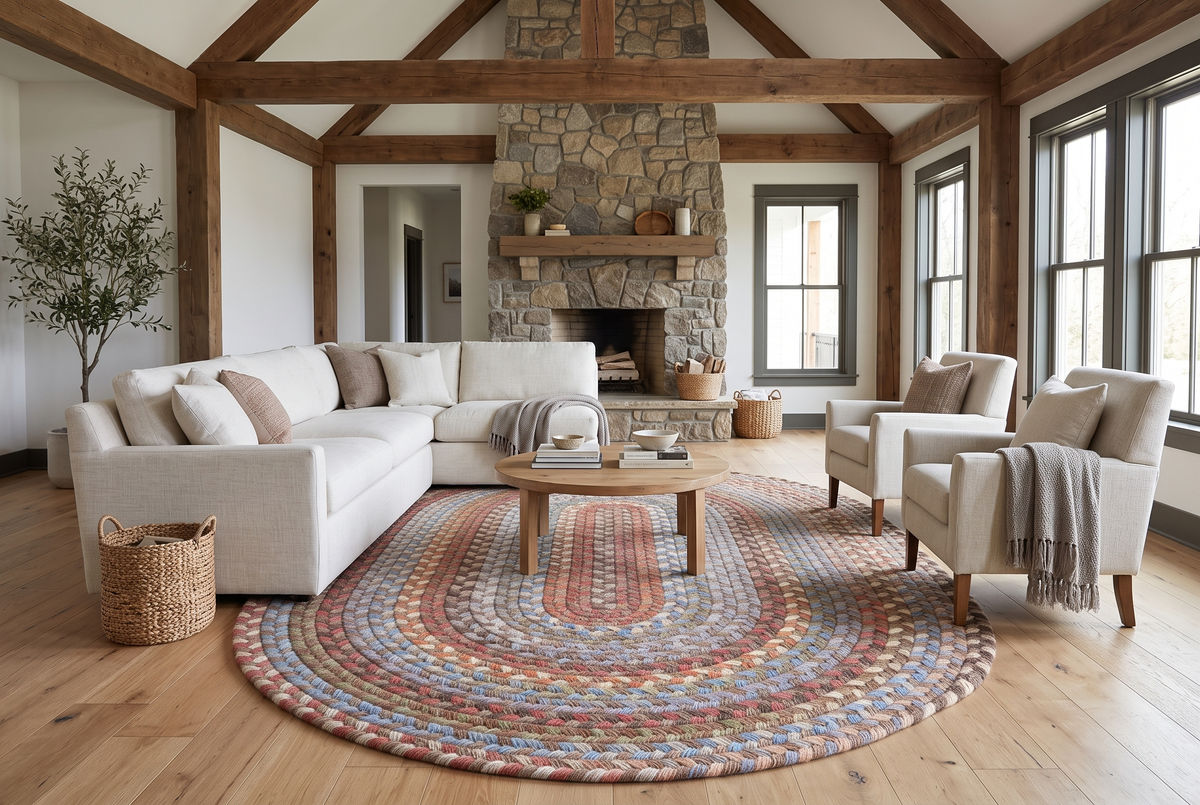
In a living room, the rug should anchor the whole seating group. At a minimum, the front legs of the sofa and every chair should rest on the rug; in a large room, having all four legs on the rug looks even more pulled together. If your rug can't reach under at least the front legs of every seat, it's too small for the room.
Step 3: Tape it out
Use painter's tape to mark the rug's outline on the floor and live with it for a day. It's the cheapest way to catch a rug that blocks a doorway, crowds a fireplace hearth or stops short of the armchairs.
Oversized Rug Sizes by Room
Great rooms and large living rooms
Open-concept spaces are where oversized rugs earn their keep. Rather than trying to cover the entire floor, use one large rug to define the main seating area and let bare floor mark the walkways. For a sectional plus two chairs, a 10' x 13' or 10' x 14' rug usually keeps every front leg on the rug with room to spare. If the room is truly huge, two coordinating rugs — one for seating, one for a reading nook or game table — often look better than one enormous rug.
Dining rooms for eight or more
A dining rug needs to be big enough that chairs stay on it when someone pulls back from the table. As our dining room rug guide explains, the common rule is to extend the rug at least 24 inches beyond the table edge on every side. A table that seats six usually works on an 8' x 10' or 9' x 12', but a table for eight or ten typically needs 10' x 13' or larger. Measure the table, add four feet to both the length and width, and you have your minimum rug size.

Primary bedrooms
With a king bed, an oversized rug lets you run the rug under the bed and still have generous coverage on both sides and at the foot. Aim for about 18 to 24 inches of rug showing beyond each side of the bed — enough that your feet land on something soft every morning.
Sunrooms, porches and four-season rooms
Large, bright rooms that see wet boots, pets and sun benefit from indoor/outdoor braided rugs, which are typically made from synthetic fibers like polypropylene that shrug off moisture and fading better than natural fibers. An oversized indoor/outdoor rug can tie wicker seating and a coffee table together the same way a wool rug would in the living room.

Rectangle, Oval or Round? Choosing a Shape at Large Sizes
Shape matters more as size goes up, because the shape changes how much floor the rug actually covers.
- Rectangles cover the most floor for their stated size and suit long, boxy rooms and rectangular dining tables.
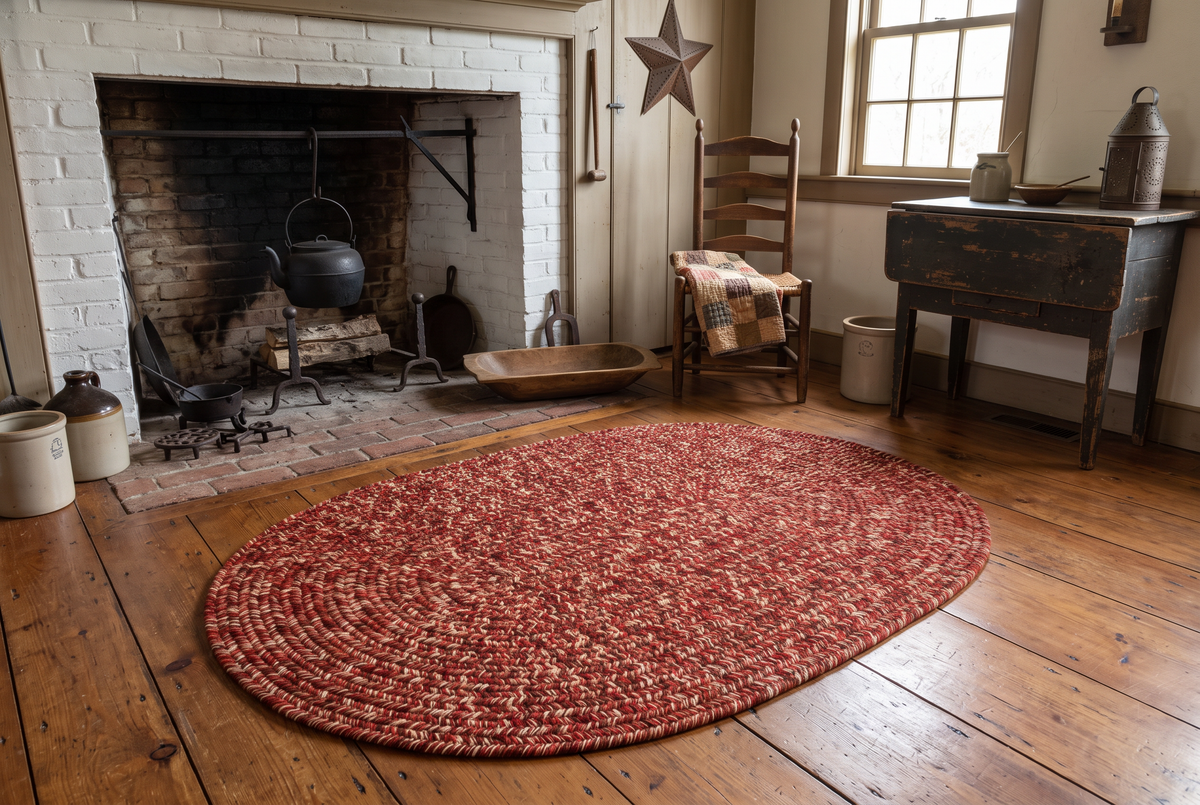
- Ovals soften a big room and work beautifully under long farmhouse tables and in traditional or country spaces. Keep in mind that an oval covers less floor than a rectangle of the same dimensions — about 78% of the area — so if you're replacing a 9' x 12' rectangle with an oval, size up to a 10' x 13'.
- Rounds are ideal for round dining tables, entry halls and square rooms. A 10-foot round is a statement piece that anchors a big round table or a square conversation area.
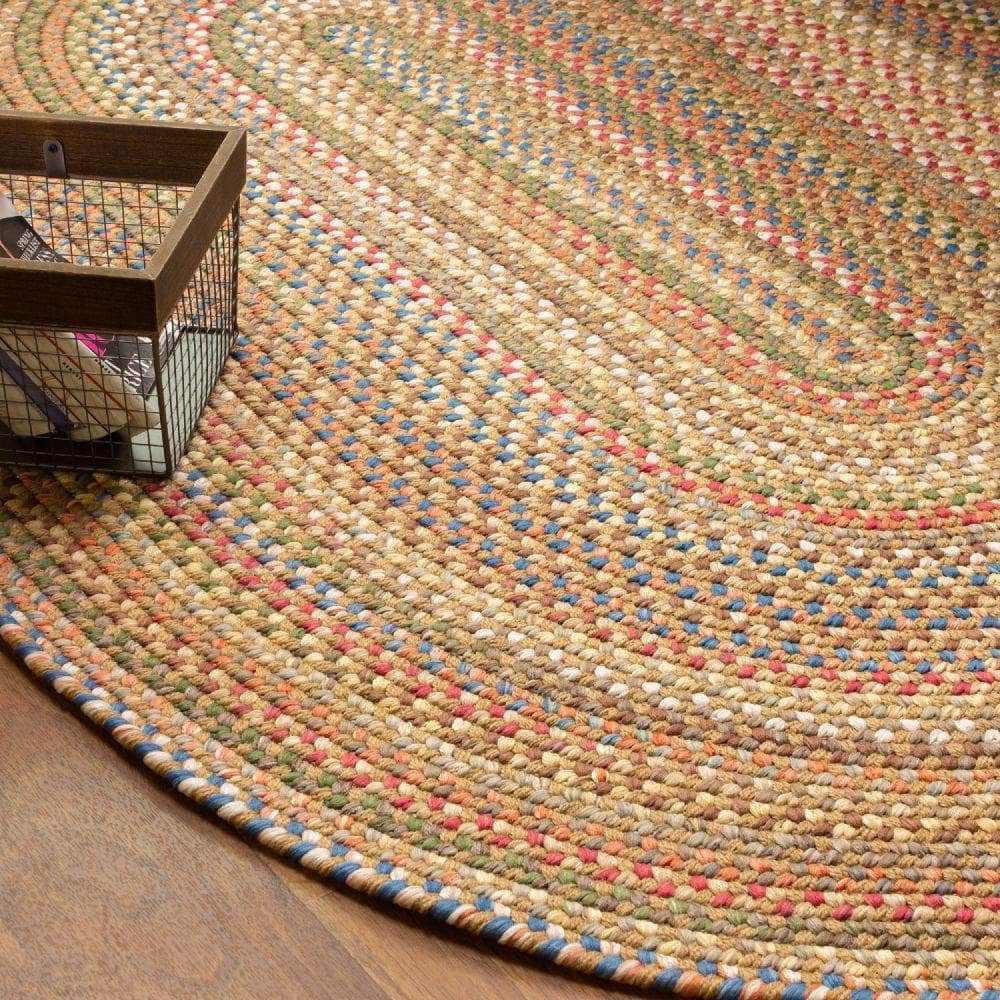
Braided rugs are a natural fit for large oval and round sizes because of how they're made: one continuous braid is coiled and laced outward, so the rug grows evenly in every direction.
Best Materials for Oversized Rugs
Large rugs get walked on from more directions and are harder to move, so durability and easy care matter even more than usual.
Wool
Wool is naturally resilient (see why wool braided rugs last for decades) — its fibers spring back after compression and resist crushing under furniture. That makes it a strong long-term choice for a large living room or dining rug that will carry heavy pieces for years. Many wool braided rugs are also reversible, so you can flip them to spread out wear.
Polypropylene (indoor/outdoor)
Polypropylene resists moisture, mildew and fading, which makes it a smart pick for high-traffic family rooms, kitchens, sunrooms and covered porches. It's also lighter than wool, which helps when you're handling a 10' x 13' rug.
Cotton and natural fibers
Cotton braided rugs are soft and casual but best kept to lower-traffic spaces at large sizes. Natural fibers like jute bring great texture, but they don't like moisture, so keep them out of damp rooms.
Practical Tips Before You Buy an Oversized Rug
Plan the delivery path
An oversized rug arrives rolled, and that roll is roughly as long as the rug is wide. Measure hallways, stair turns and doorways before ordering so the rug can actually reach the room.
Use a rug pad
A good rug pad keeps a large rug from shifting, protects hardwood floors and adds cushion. Trim the pad about an inch smaller than the rug on each side so the edges taper neatly to the floor. Our guide to rug pads covers types and thicknesses in detail.
Rotate it
Rotate an oversized rug every six to twelve months so sunlight and foot traffic wear it evenly. With reversible braided rugs, flip it too.
Clean it in place
Most large rugs are too big for a home washer. Vacuum regularly, blot spills right away, and plan on professional cleaning or careful spot cleaning for anything major.
Frequently Asked Questions
What size rug is considered oversized?
Most retailers consider any rug larger than 9' x 12' to be oversized. Popular oversized sizes include 10' x 13', 10' x 14', 12' x 15' and 12' x 18', along with rounds of 10 feet or more.
Is a 9x12 rug big enough for a large living room?
It depends on the room. A 9' x 12' works well in rooms up to about 12' x 15'. In bigger rooms it often leaves too much bare floor around the edges, so a 10' x 13' or 10' x 14' will look more proportional.
How far should an oversized rug be from the walls?
Leave about 12 to 24 inches of bare floor between the rug and the walls. Around 18 inches is a good starting point for most large rooms.
Should all furniture legs be on a large area rug?
Ideally, yes — in a large room, an oversized rug that holds all four legs of the sofa and chairs looks the most cohesive. If that's not possible, make sure at least the front legs of every seat rest on the rug.
Do oval rugs come in oversized sizes?
Yes. Braided rugs in particular are commonly made in large ovals such as 9' x 12' and 10' x 13', as well as 10-foot rounds. Because an oval covers less floor than a same-size rectangle, consider sizing up one step.
What is the best material for an oversized rug in a high-traffic room?
Wool is a durable, long-lasting choice for living and dining rooms, while polypropylene indoor/outdoor rugs are easier to clean and stand up well to moisture, pets and sunlight.
Final Thoughts on Choosing Oversized Rugs
The right oversized rug makes a big room feel finished: measure the room, leave an even border, get every seat on the rug, and choose a shape and material that suit how the space is used. Get those right and the rug does the rest. If you're shopping for oversized rugs, browse the braided rug collections at superarearugs.com — many of our wool and indoor/outdoor braided styles come in large sizes up to 10' x 13' ovals and 10-foot rounds, so you can find a rug that fits the whole room, not just the middle of it.